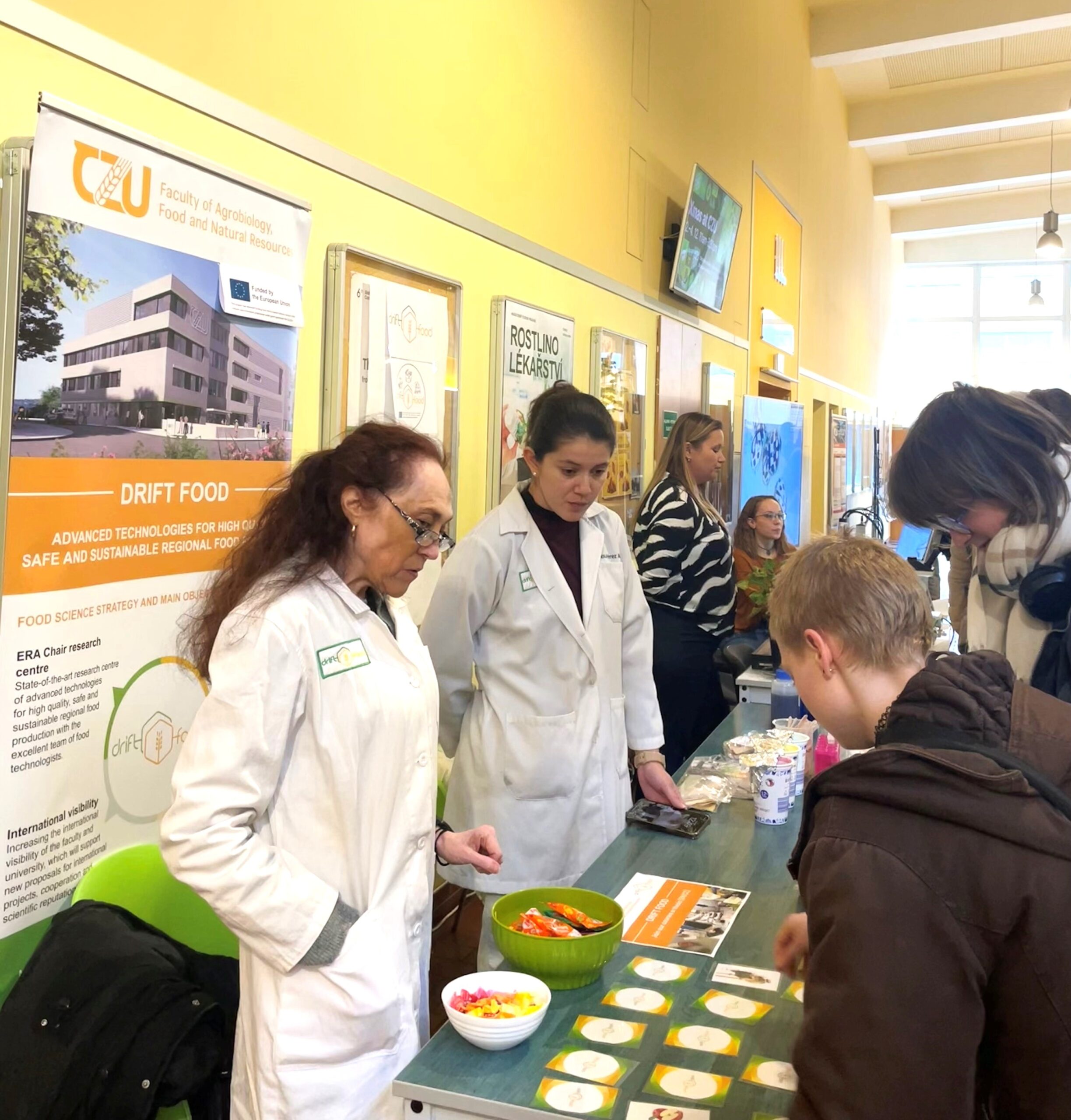
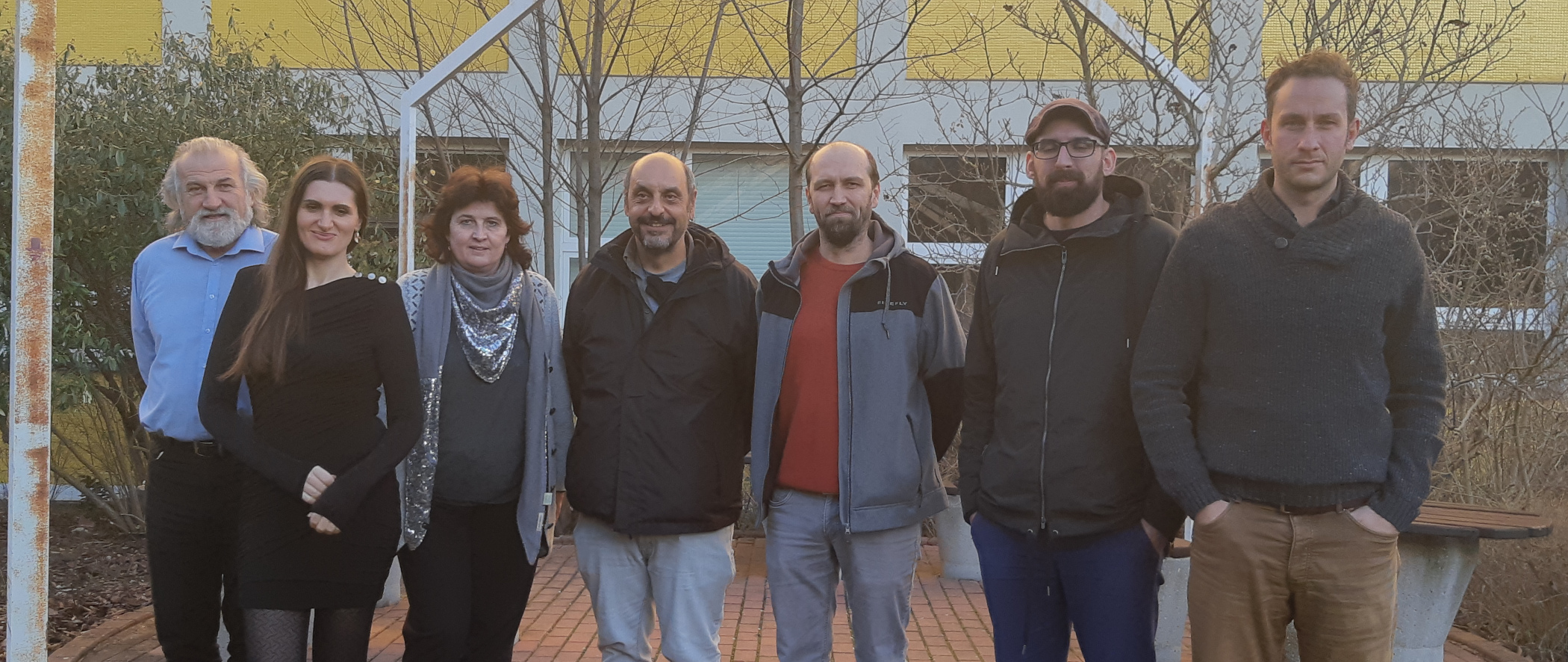
The ambitious DRIFT-FOOD project, which has been running at the Faculty of Agrobiology, Food and Natural Resources since 1 October 2020 under the European Horizon 2020 ERA Chairs programme, is coming to an end. It aimed to build and strengthen the Faculty’s long-term research capacity in food technology. This goal has been achieved: an interdisciplinary centre of excellence has been established at CZU, the University’s scientific and educational capacities have been strengthened, and modern food technologies have been made more accessible to industry and other stakeholders. The DRIFT-FOOD Research Centre was established at the Faculty. Although the project had to cope with several personnel changes, a stable international team has been formed whose activities will continue well beyond the project´s end.
The project’s first leader, or ERA Chair Holder, Professor Constantinos Stathopoulos, left in 2023. He was succeeded on 1 September 2023 by Dr Diana Karina Baigts-Allende, who also left in 2026, several months before the project was due to conclude. Professor Pavel Tlustoš subsequently took responsibility for bringing the project to completion. We asked him to reflect on DRIFT-FOOD, a project he had coordinated from the very beginning.
When the prestigious international Horizon 2020 project DRIFT-FOOD was launched at the Faculty of Agrobiology, Food and Natural Resources in 2020, it was described as a cutting-edge workplace that would serve as a centre of excellence for food technology research. Has that vision been fulfilled over the project’s six years?
There is no simple answer to that question, but the ambition was certainly very high at the beginning. As the Faculty’s leadership at the time, we had experience both in managing the Faculty and in following developments in the agricultural sector, an area in which the Faculty is particularly strong. Programmes focusing on the processing and quality of agricultural production were subsequently developed, forming the basis of food science, but food technology itself was still lacking.
If we wanted to cover the entire agri-food chain and compete with leading universities, we needed to focus on technology. We began building the Food Pavilion, a truly unique teaching and production facility not only in the Czech Republic but also in Europe, with the aim of combining real production with research.
There is generally a shortage of highly qualified food technologists in the Czech Republic; it is a relatively small professional community. Our Faculty is excellent in food quality and safety, but we are less advanced in food technology and food processing. While the Food Pavilion was being built, we decided to apply for an ambitious ERA Chairs project.
We established a project committee that included Associate Professor Klouček, Head of the Department of Food Quality and Safety; Professor Kouřimská, an established expert in food, quality and sensory analysis; Professor Vlková, the current Dean, an experienced microbiologist and at the time Head of the Department of Microbiology, Nutrition and Dietetics; Professor Sedmíková, then Vice-Dean for Science; myself, representing international relations; and Dr Pacek from the project department. We agreed that it was worth trying. We already had the operational facilities, so all that remained was to secure highly qualified personnel. That is how the idea of submitting an ERA Chair proposal was born. I was selected as the coordinator because I had previously led NutRisk, a successful centre of excellence at the Faculty, and I also have a strong scientometric record.
What was the plan?
To bring leading experts to the University who were working with these technologies at research institutions and universities, and to build a “DRIFT-FOOD team” focusing on food technologies. The team would conduct research, collaborate with industry, train the next generation of experts, and develop further projects that would enable the centre to grow and ensure the continuation of its activities.
Which of the projects would you highlight as the most beneficial?
I have to say that members of the DRIFT-FOOD team submitted many project proposals. Still, due to several personnel changes, continuity was lacking, and most of the proposals were not funded. However, we secured the ECO-READY project, one of the largest Horizon Europe projects in the Czech Republic. It does not focus directly on food technologies, but rather on food security in relation to biodiversity, climate change and similar issues. It is future-oriented and aims to prevent the problems we are likely to face due to climate change.
DRIFT-FOOD will come to an end this autumn. In your view, has the project fulfilled its vision?
It has, in the sense that an area previously missing from our agri-food expertise has now been filled to some extent. We have recently completed a selection procedure for a team of three experts who will focus on food technologies within the Department of Food Quality and Safety.
We wanted to recruit capable people, and now we have them. One will work as a senior researcher, and two will work in junior positions. Each of them will be able to supervise new students and doctoral candidates and carry out research and innovation. This field will therefore have continuity and a future.
That is the first thing we have achieved. We have also invested in new equipment that helps us develop modern food technologies. When people think of conventional food technology, they imagine meat processing, baking or dairy production. But there are also devices, instruments, and principles that cut across these individual sectors and enable the processing of raw materials in entirely different ways. That is precisely the kind of equipment we now have available.
These are only the first steps, and I would be very pleased if we could continue along this path and use it to support our Food Pavilion.
Are you succeeding in applying the results in practice?
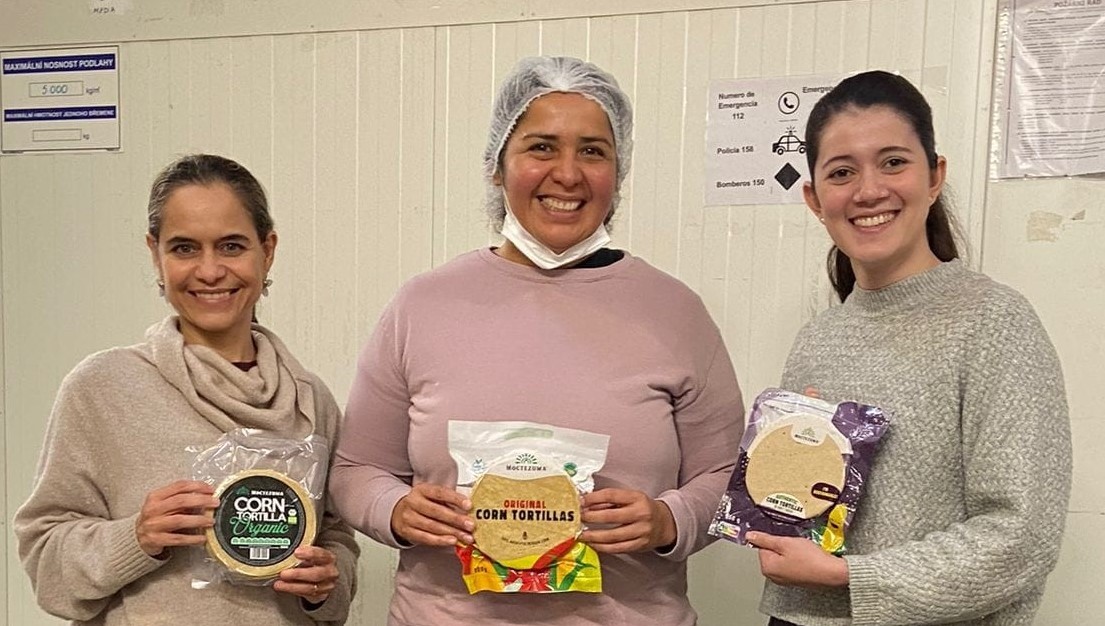
Getting research into practice is never easy. But I can mention one example. Thanks to our most recent project leader, Dr. Diana Baigts-Allende from Mexico, we managed to improve tortillas for a supplier to a fast-food chain that had been experiencing problems with the tortillas drying out. By modifying both the recipe and the production technology, we succeeded in making the tortillas softer, more flexible and able to retain these properties for longer.
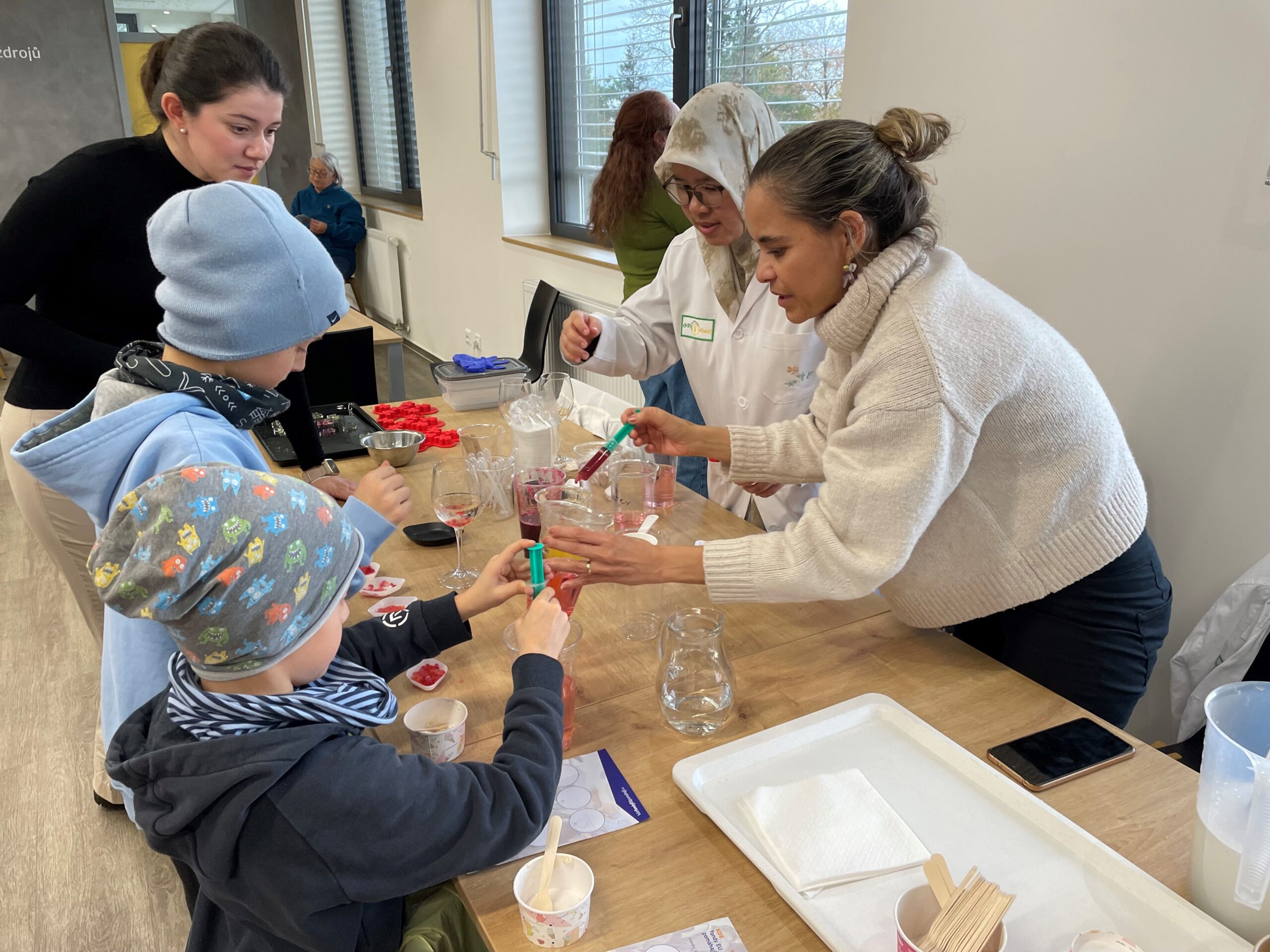
Another success is our ice cream produced in the Food Pavilion, where we use a completely different type of technology from the conventional approach: multilayer emulsions and Pickering emulsions. These allow us to combine ingredients that would normally be immiscible, such as water and oil, producing a pleasant mixture that you can then add other ingredients to. It is an interesting direction with potentially broad applications. We also want to produce pasta using by-products, which increases both its fibre and protein content and can therefore be highly beneficial from a nutritional point of view.
One of your priorities is to make use of secondary “waste” materials generated by the food industry. How does that work?
In DRIFT-FOOD, we do not really regard waste – or, more accurately, by-products – as waste at all. We see them as raw materials for further use in food production. We take care of them, and they have clearly defined quality parameters.
Part of the original raw material is used in the main production process, while another part remains. Yet this remaining material still contains many beneficial substances and is digestible, which means we can make further use of it. One example is brewer’s spent grain, which remains after filtering the wort during beer production. Spent grain contains proteins, fibre and nutrients, so it makes perfect sense to find additional uses for such a material. That is one of the directions we are pursuing, and we are continuously looking for further possibilities. For example, when the Food Pavilion produces large-scale juice from our own apples, a considerable amount of by-product remains. This by-product can be processed and used, for instance, in yogurt, which contains fibre and minerals. So, rather than talking about waste, we should be talking about a secondary raw material with its own quality and value.
What kind of response have you received outside the University, both in the Czech Republic and internationally?
In the Czech Republic, companies are already showing interest in developing certain food technologies. One example is Agra Group. There is also interest in further collaboration with a Mexican company which sells its products on the Czech market.
From a scientific perspective, DRIFT-FOOD is assessed according to the quality of its scientific publications and their citation impact, and we have also been successful in this respect.
The ERA Chair Holder and all other team members were recruited internationally, which helped strengthen cooperation among universities, particularly within Europe. We can therefore regard the international response as positive.
Your researchers recently evaluated Jihočeská Niva cheese and found that its quality is at least comparable to French blue cheeses.
The results concerning Jihočeská Niva were very interesting. We found that it meets all the parameters of comparable cheeses from leading international producers that cost several times more, and that it fully matches them in terms of quality assessment.
We also analyzed Blaťácké zlato, which is perhaps a somewhat more specific cheese and less visible on the European market. Here, too, we found a favourable protein composition and antioxidant properties. I would be very pleased if we could begin producing some flagship cheeses in our Food Pavilion. However, this segment is extremely demanding in terms of both equipment and human resources.
An ERA Chair Holder should be both a top-level manager and an excellent scientist. Do you think it would have been difficult to find someone like that in the Czech Republic? DRIFT-FOOD was first led by a Greek scientist and then by a Mexican scientist…
The competition was open, but it did not attract anyone from the Czech Republic. We approached the process responsibly and tried to attract candidates with remuneration that was very competitive by Czech standards. After some initial difficulties and the restrictions imposed by COVID-19, the first leader was eventually the internationally renowned Greek professor Dr. Costas Stathopoulos. He came to see the University, accepted our offer, but perhaps he was a little too ambitious for the Czech environment. His expectations were very high, and he wanted everything immediately, which is not always possible in this environment. Project funding is allocated in a certain way, you operate according to project rules, and the Faculty has certain limitations. He helped us build the team and then left relatively quickly. He probably had his reasons.
We subsequently selected the Mexican scientist Dr. Allende for the ERA Chair position. She moved in a somewhat different direction from her predecessor. Still, over time, a stable team was formed, developed its capabilities and equipment, and began generating results in line with the project requirements.
As you say, Diana Karina Baigts-Allende did not continue everything that Costas Stathopoulos had started. What did that mean for the project? After all, you have a vision and a sense of where you want the project to go, and then someone with a different approach steps in.
She did not start in a completely different direction. She was recruited based on the original vision, so she agreed with its foundations. But naturally, the ERA Chair – and the project explicitly requires this – determines the direction and drives the whole team forward. Some changes, therefore, took place, including changes to the requirements for research equipment.
The team settled in and worked well. And then, quite suddenly, there was a major disappointment. Without giving a reason, Dr. Allende told us that she was leaving. For me, that marked the beginning of a very difficult period.
So, everything fell on your shoulders?
The rules are such that if there is no ERA Chair Holder, the project ends. But at the same time, you have people here with contractual commitments for a certain period.
We therefore had to discuss with both the management in Brussels and the Faculty leadership how to bring the project to a successful conclusion. Roughly four months were remaining. We proposed a solution in which I would take responsibility for it myself. There was really no other option if we wanted to meet all the outputs and commitments and close the project successfully.
So, following approval from Brussels, I effectively became the ERA Chair Holder by mutual agreement. From the perspective of the Faculty’s reputation, this was clearly the better option. If the project had ended in June, many things would have remained unfinished, and there would also have been considerable financial losses. We have now selected three people who, starting in October, after the project ends, will continue developing the field of food technology in accordance with the Faculty’s rules.
The vision has been accomplished: you have launched something that will continue?
Yes. And it will genuinely strengthen the link with the Food Pavilion.
Many people see the Food Pavilion primarily as a place where good, high-quality food is produced. But we would like it to become a place where innovative products appear – products that people will come from all over Prague and beyond, specifically to try.
That was one of our visions, and I believe we will make it a reality.
What has DRIFT-FOOD brought you personally?
Mostly worries. On the other hand, I am pleased that I was there at the birth of the Food Pavilion, that we managed to recruit talented people and that we are genuinely developing – and will continue to develop – innovative food technologies. Thanks to the DRIFT-FOOD project, we have gained access to equipment and techniques that are currently emerging in the food industry. If you want to achieve the required quality and taste while preserving natural substances in food, you need new technologies and capable people. I believe that we now have both.
How successful are you in communicating all of this to the public – your approach, information about food safety and everything you have been working on for the past six years?
That is genuinely a long-term process. Our Faculty has always been, and continues to be, very strong in agriculture. We are now increasingly seeing our experts speaking about food in the media. In the past, that field was largely associated with the University of Chemistry and Technology Prague, but I believe we have now built a position of our own. Our advantage is that our food science is directly connected to agriculture. That makes us much more flexible, because you may subsequently use various raw materials resulting from agricultural experiments in food research and in the development of new technologies.
The conclusion of a project that you have coordinated throughout its existence is now in your hands.
I want to stress that it certainly does not depend solely on me. We still have an active project committee, and the project manager, Vladimir Coi?an, is providing me with substantial support.
Given the situation, however, I had to take over management personally.
For me, this is somewhat more complicated because I am not a food scientist. My original background is in chemistry.
What interested you about the project?
I really like the idea behind it. I have participated in many international projects for a long time, and the concept of an international project of this kind appealed to me enormously.
I should add that it was by no means easy to push through the Food Pavilion, which we tend to take for granted today. At one stage, it looked as though they would not build it at all.
I do not want to say it was my baby, but with the support of the then Rector, Professor Balík, we secured funding for its construction through an operational programme.
However, we still needed to secure people who would focus on developing food technologies. That is when we came up with the idea of applying for an ERA Chair project. And we succeeded.
What were the greatest challenges of the project?
Right at the beginning, there was COVID. Another major disappointment came with the first selection process for the ERA Chair Holder, when the candidate we had selected let us down.
I had hoped that the academic environment was fair – that when someone gave you their word, they would keep it. You build something, get it running, and suddenly you find yourself without a leader. At that point, you naturally ask yourself why. Nevertheless, we managed to get through that as well.
I believe that the entire six-year effort of the DRIFT-FOOD team has been extremely important to both the University and the field of food technology.
The project also provides a very strong foundation on which we can continue to build, and I believe the University will further establish itself in the field of food technologies.
I would like to see us introduce a study programme in food technology because there is a shortage of specialists in this field on the labour market.
What would you like to see in the future?
I want food technologies to become an integral part of both teaching and research. Once that happens, practical application is only a small step away.
How would you assess the Czech Republic in terms of modern food technologies?
In my view, we have made significant progress and moved much closer to the European standard.
It always comes down to funding and people, but I believe we have talented people with good ideas here. The problem is that such people are in high demand. We need to keep them here and create the conditions that allow them to develop. I always say that one exceptionally capable person is enough to lead ten hard-working people. We need to build top-quality teams and draw on experience from abroad.
The Czech researchers who worked on the project will certainly leave it with a wealth of valuable experience.
I was somewhat disappointed that we did not manage to involve more Czech doctoral students in our team. Most of the people we selected were international applicants. Perhaps our students lacked the confidence to join a fully international team that communicated exclusively in English. But after those six years, we have moved another step forward. And I believe that we will be even better in the future.
Interview by Lenka Prokopová