The latest issue of the prestigious scientific journal Nature features an article by ecologist Peter Mikula from bullab at the Department of Ecology, Faculty of Environmental Sciences, Czech University of Life Sciences (CZU), in its ‘Correspondence’ section.
Researchers from the Czech University of Life Sciences Prague (CZU) have been ranked among the world's most-cited scientists according to the prestigious international Stanford–Elsevier Global Top 2% Scientists database. Each year, the ranking identifies researchers with the greatest citation impact based on data from the Scopus database. The assessment takes into account not only citation counts and the impact of scientific publications, but also co-authorship and individual author contributions. The inclusion of CZU researchers confirms the international reach and significance of their scientific work.
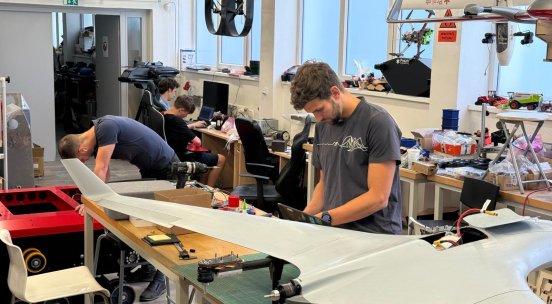
The Czech University of Life Sciences Prague (CZU) will participate in the international trade fair and professional forum Future Forces Exhibition & Forum for the third time, taking place from 21 to 23 October 2026. Its spin-off company, ProLab Engineering, will showcase not only the autonomous HECTHOR platform in new applications, but also Orbitron, an entirely new crewless aircraft capable of vertical take-off and landing. According to its developers, the six-meter version will be able to remain airborne for up to 24 hours and achieve a range of up to 2,000 kilometers. Petr Hnízdil from ProLab at CZU's Faculty of Engineering discusses the latest innovations, cooperation with other Czech companies and educational institutions, and why university-developed technologies should not remain confined to laboratories.
Fans of top-tier science documentaries should turn their attention to the Czech University of Life Sciences Prague (CZU) campus. From October 19 to 22, it will host the international Prague Science Film Fest, offering experiences tied to discovery and the realization that the world around us can look quite different from what we thought. Viewers can look forward to film premieres, discussions with filmmakers and scientists, an outdoor cinema, an exhibition opening, and even a conference that calls itself "boring." Admission is free.
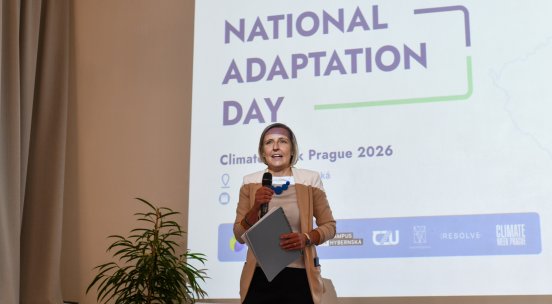
How to turn climate policies on paper into real-world action? That was the core question at National Adaptation Day, held on Tuesday, September 15, 2026, at Kampus Hybernská in Prague. The event brought together government officials, local authorities, and climate experts to highlight real-world examples of how Czech cities and rural areas are successfully adapting to climate change.
How successful are Czech universities in meeting the objectives of the Strategy for the Internationalization of Higher Education until 2030? A new study by the National Training Fund provides an answer, comparing 26 public universities in the Czech Republic. Its findings show that individual universities take different approaches to internationalization and that their results vary considerably. Czech University of Life Sciences Prague achieved the highest overall score and demonstrated balanced performance across all assessed areas, with the best result in international mobility.
The Every Plate Counts awareness campaign, implemented during the 2025/2026 summer semester at the Czech University of Life Sciences Prague (CZU) canteen, contributed to a reduction of 450 kilograms of food waste. This amount is equivalent to approximately 1,120 to 1,290 meal portions that were prevented from ending up as waste. The success of the initiative also attracted the attention of the canteen’s operator, Delirest, which is now considering the adoption of the campaign's educational materials across its dining facilities throughout the Czech Republic.
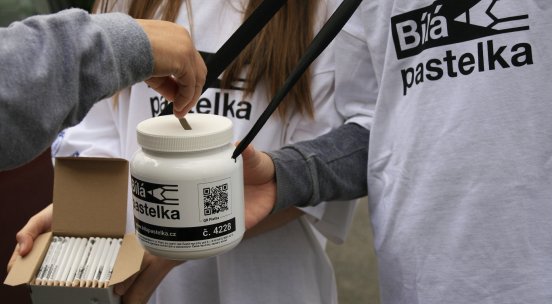
This year, the Czech University of Life Sciences Prague will once again participate in the nationwide White Crayon public fundraising campaign through its Counseling Services Center. The campaign supports people with visual impairments. The fundraising day at the CZU campus will take place on 13 October 2026 as part of Student Organizations Day.
The Czech University of Life Sciences Prague has once again been included among the world’s universities assessed in the prestigious Times Higher Education World University Rankings. The latest edition, for 2027, was published on Wednesday, 30 September 2026.
“ESDW is an opportunity for us to share experience, draw inspiration from others and, together with other European universities, look for concrete ways to make higher education institutions more sustainable. We do not see sustainability as a separate topic, but as a principle that should permeate teaching, research and the everyday life of the university,” says Vice-Rector Lenka Wimmerová, commenting on the involvement of the Czech University of Life Sciences Prague in European Sustainable Development Week.
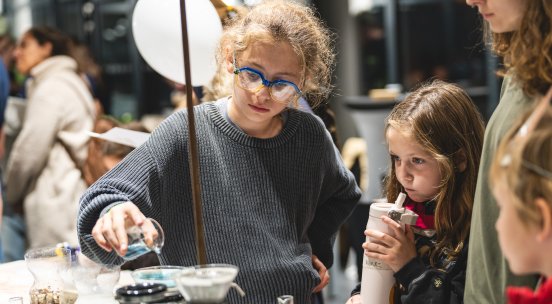
On Friday, 25 September 2026, the campus of the Czech University of Life Sciences Prague welcomed around 900 curious visitors of all generations. The central theme of this year’s Science Night was COMMUNICATION, and more than 40 stations across the University’s six faculties demonstrated that humans are far from the only ones exchanging information. Plants, animals, technologies and entire ecosystems also communicate in their own ways. Science is the language through which the universe speaks to us, and Science Night is an opportunity to try to understand it.
The Department of Information Engineering at the Faculty of Economics and Management of the Czech University of Life Sciences Prague is monitoring and providing expert support for the deployment of the JEV model at the Mironet.cz e-shop. This is one of the first cases in Europe in which a model deliberately designed not to generate text is entering commercial operation. For the public, it is an opportunity to understand why part of AI research is shifting away from language generation and back towards well-measured uncertainty.
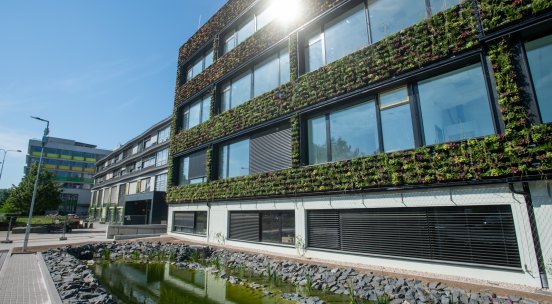
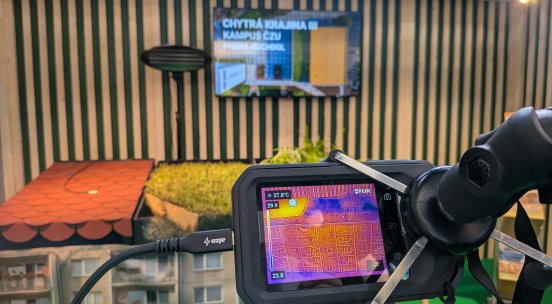
The new center in Chodov, in the Karlovy Vary Region, integrates water management, green spaces, renewable energy sources, and smart technologies. Rather than simply presenting individual solutions, it will measure and evaluate their performance in real-world conditions over the long term and share the insights gained with cities and municipalities.
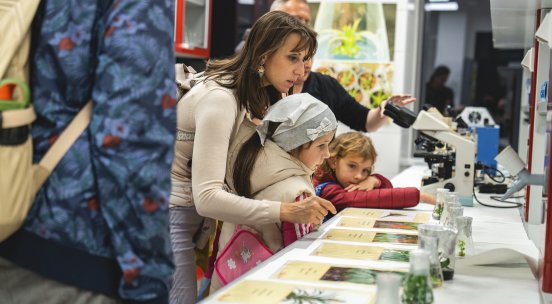
In cooperation with the National Museum of Agriculture in Prague and the Czech University of Life Sciences Prague, the Ministry of Agriculture is organising the 11th edition of the educational competition Discovering the Secrets of Food – Do You Know What You Eat? for families with children and school groups. The event will take place on 2 and 3 October 2026 at the National Museum of Agriculture in Prague.
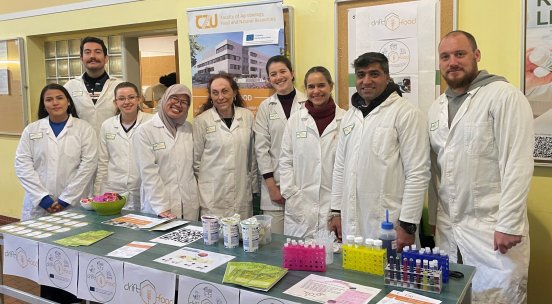
The ambitious DRIFT-FOOD project, which has been running at the Faculty of Agrobiology, Food and Natural Resources since 1 October 2020 under the European Horizon 2020 ERA Chairs programme, is coming to an end. It aimed to build and strengthen the Faculty’s long-term research capacity in food technology. This goal has been achieved: an interdisciplinary centre of excellence has been established at CZU, the University’s scientific and educational capacities have been strengthened, and modern food technologies have been made more accessible to industry and other stakeholders. The DRIFT-FOOD Research Centre was established at the Faculty. Although the project had to cope with several personnel changes, a stable international team has been formed whose activities will continue well beyond the project´s end.
On September 4, 2026, the Faculty of Tropical AgriSciences (FTZ), Czech University of Life Sciences Prague, hosted the first PH-CZ STARR (STrengthening Academic and Research Relations) scientific meeting, bringing together representatives of academia, research, and diplomacy to share experiences and explore new opportunities for cooperation between the Philippines and the Czech Republic.
From the language of plants and animals and the signals hidden within our bodies to communication between robots and a racing car. Science is the language through which the universe speaks to us, and the Night of Science is an opportunity to explore the mysteries of that language and try to understand it. The popular science event will take place on Friday, 25 September 2026, at numerous locations across the Czech Republic, this year under the central theme of COMMUNICATION. The Czech University of Life Sciences Prague will welcome visitors to its campus from 5:00 p.m. to 10:00 p.m., offering more than forty interactive stations across all six faculties.
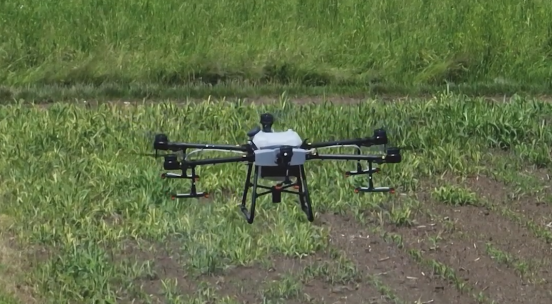
A drone surveys a crop, the data are rapidly analyzed, and agricultural machinery can immediately take targeted action based on the results. The AGRIP project combines drones, multispectral cameras, artificial intelligence, and a 5G SA network to enable faster, more precise decision-making in agriculture. The Czech University of Life Sciences Prague (CZU) has also been involved in developing and testing the technology.
The Food and Agriculture Organization of the United Nations (FAO) has selected Ing. Monika Nebeská as one of the first-ever 100 FAO Women Heroes in Agrifood Systems and Rural Development – exceptional women whose professional and personal stories inspire others and help shape the future of agriculture, the food sector and rural areas. One of the leading figures in Czech agriculture, she also serves as Vice-Chair of the Board of Trustees of the Czech University of Life Sciences Prague.
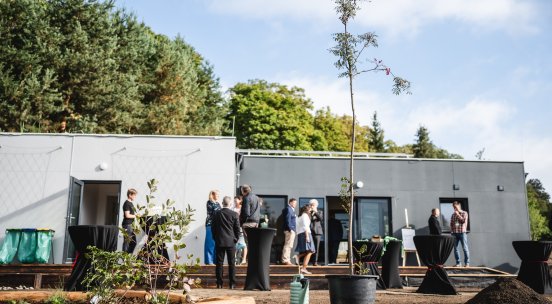
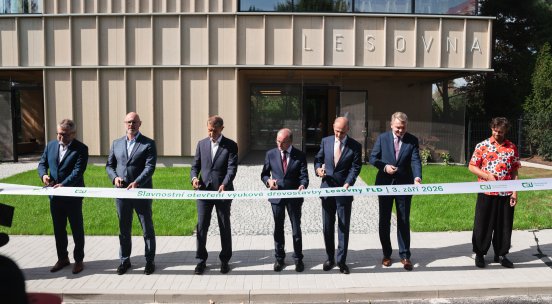
On Thursday, 3 September 2026, the Faculty of Forestry and Wood Sciences officially opened Lesovna, a demonstration timber building designed to serve education, research and the promotion of modern timber construction. Lesovna combines Czech timber, outstanding architecture and close cooperation with industry. The new building brings together cutting-edge architectural design, innovative technologies and Czech wood as a renewable material of the future. It was made possible through exceptional cooperation between the Faculty of Forestry and Wood Sciences at the Czech University of Life Sciences Prague and partners from the forestry and wood-processing sectors.
Over the past few years, the Faculty of Tropical AgriSciences (FTZ) at the Czech University of Life Sciences Prague has been developing strong scientific cooperation with the Philippines, particularly in the fields of animal science, animal physiology and behaviour, and wildlife conservation. The Animal Physiology and Behaviour research team has played an important role in building these academic and research links.
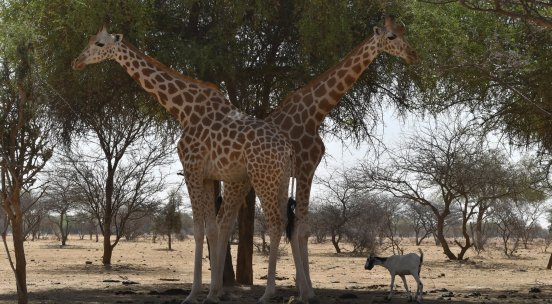
A study on the future of the West African giraffe, conducted in collaboration with researchers from the CZU Faculty of Tropical AgriSciences, caught the attention of the prestigious journal Nature. The journal ranked it among the most interesting recent scientific papers focusing on Africa.
The very first day of CZU presentation at the agricultural fair Země živitelka in České Budějovice set the tone for this year’s exhibition. The Smart Landscape initiative, both in urban and rural areas, is the university’s flagship project. This time, it was introduced in the context of the regeneration of the Karlovy Vary region and solutions that can help cool overheated cities in the era of climate change. Over the following days, the CZU stand showcased a variety of smart solutions for diverse areas of life—ranging from plant health protection to natural cosmetics and the fight against the illegal wildlife trade, to forest management and technologies that can save human lives. Perhaps the biggest draw was the Hecthor II firefighting robot. Of course, it is impossible to showcase the full range of topics the university covers in a single exhibition stand. Nevertheless, from August 20 to 25, visitors were able to take away a number of inspiring experiences from the CZU exhibition and gain insight into research findings that have tangible practical applications.
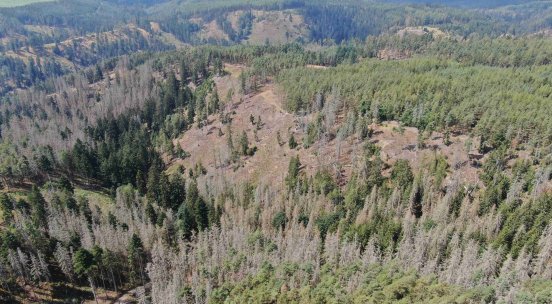
The PROLES map application is a tool designed for forestry professionals and managers, as well as members of the public interested in the condition of our forests. It offers unique insights into current and future forest damage in the Czech Republic and represents an invaluable source of information for forest management in the 21st century. At the Země živitelka agricultural exhibition, PROLES was presented on Sunday, August 23 by the Faculty of Forestry and Wood Sciences, which developed this professional tool in cooperation with the Ministry of Agriculture. Read more in our interview with Professor Tomáš Hlásny from the Forest Risk Research Department at the Faculty of Forestry and Wood Sciences, Czech University of Life Sciences Prague.