A study on the future of the West African giraffe, conducted in collaboration with researchers from the CZU Faculty of Tropical AgriSciences, caught the attention of the prestigious journal Nature. The journal ranked it among the most interesting recent scientific papers focusing on Africa.
The study, published in the journal Biological Conservation, caught the attention of Nature’s editorial board with its comprehensive view on the future of the West African giraffe. The article, titled “West African giraffe, seaweed, intimate partner violence, khat, brain health and infertility, and diabetes,” ranked it among the studies that provide important insights from the African continent.
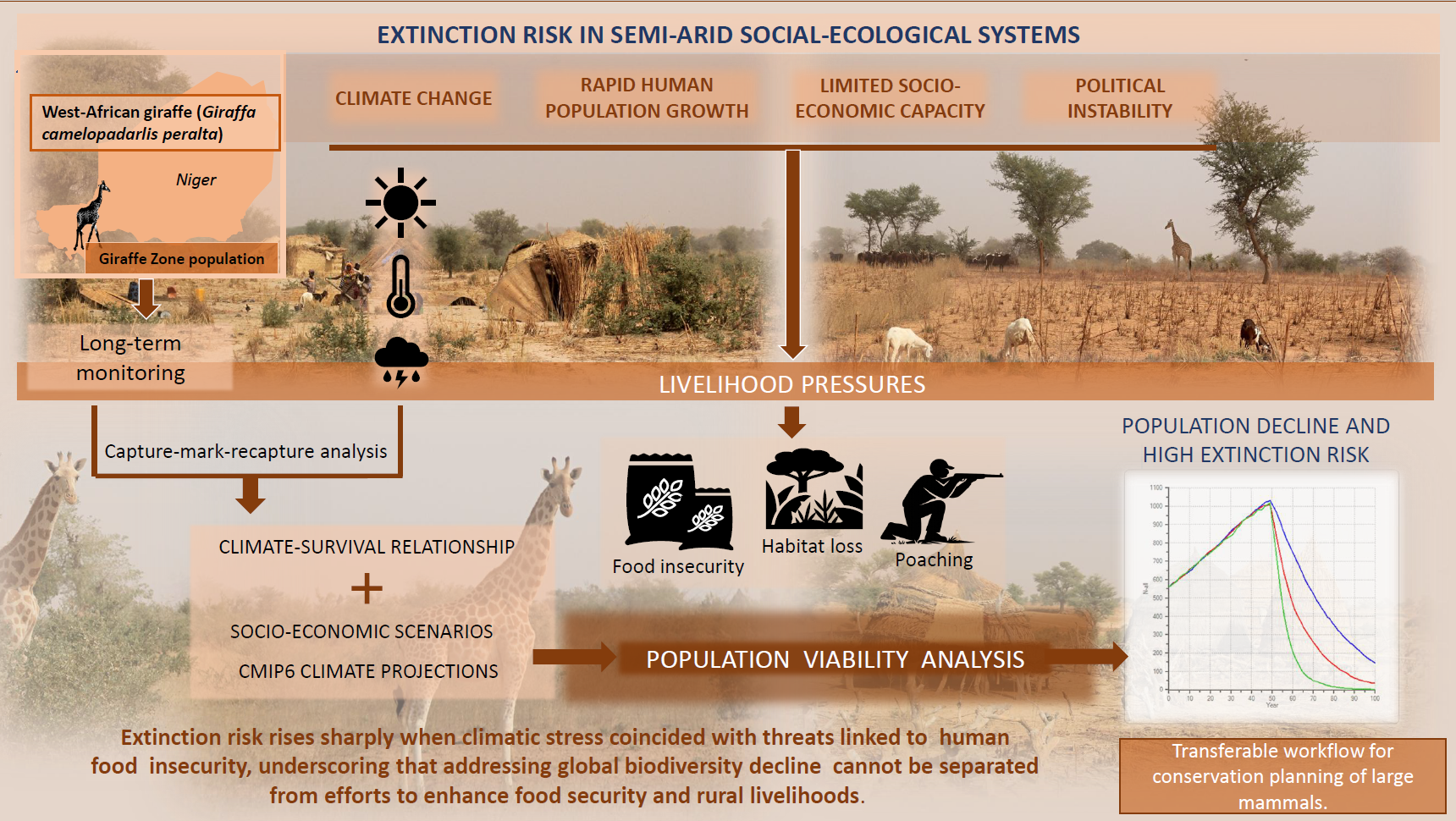
The study was based on decades of giraffe monitoring, climate data, demographic data, and computer modeling. The research team, led by lead author Mara Vukelić, demonstrated that climate change alone may not pose an immediate threat of extinction to the West African giraffe. However, the risk increases significantly when climate stress is combined with a decline in food sources and suitable habitats, as well as poaching linked to food insecurity.
It is precisely this interconnection between environmental and social factors that Nature highlights in its article. The study’s lead author, Mara Vukelić, points out that the future of giraffes also depends on their ability to coexist with local communities over the long term.
“The future of this species must therefore be viewed within a broader socio-ecological context. It is not enough to monitor climate change alone—conditions that affect habitat availability, relationships between people and wildlife, and the risk of poaching also play a crucial role,” explains Mara Vukelić.
The success of the West African giraffe demonstrates that effective conservation can work. While only 49 individuals survived in Niger in 1996, their numbers now stand at approximately 600. However, the future of the population will depend on the preservation of a suitable habitat, effective conservation, and the long-term coexistence of giraffes with local communities.
The research thus conveys a broader message that goes beyond the conservation of giraffes alone: biodiversity conservation is closely linked to addressing food insecurity, poverty, and living conditions for people in rural areas.
Long-Term Collaboration for Giraffe Conservation
The research is a result of long-term collaboration between the CZU Faculty of Tropical AgriSciences and the Antelope Conservation research team, in partnership with the Giraffe Conservation Foundation. This joint effort combines long-term field monitoring, research, and modeling with practical giraffe conservation and contributes to a better understanding of how their populations can be protected in a rapidly changing environment.
Other international partners, including the government of Niger, also collaborated on the research. It is precisely this combination of scientific research, long-term monitoring, and collaboration with conservation organizations and local institutions that makes it possible to gather the data needed for the effective conservation of this endangered species.
The original study was published in the Biological Conservation journal. Its findings have now also caught the attention of the editors at Nature, who included it in their selection of research from Africa.
Read the research selection in Nature: West African giraffe faces threats beyond climate change
Photo: Abdoul Razack Moussa