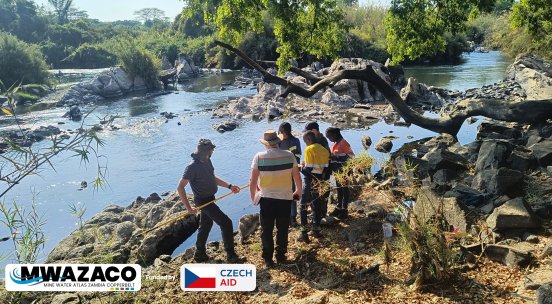
Copper mining in Zambia’s Copperbelt poses a threat to local water resources. A team from the Czech University of Life Sciences Prague’s Faculty of Tropical AgriSciences is helping develop ways to safely treat and reuse mine water.
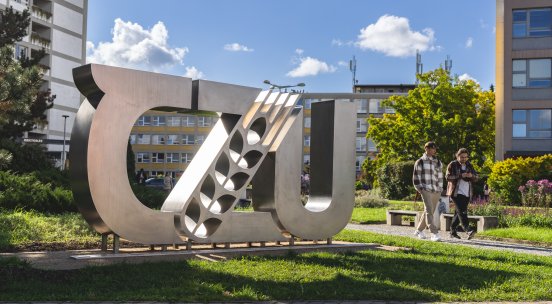
The Czech University of Life Sciences Prague (CZU) has ranked among the most successful Czech universities in the latest edition of the Leiden Ranking. It is one of only two Czech universities with an above-average share of highly cited publications by global standards. It also ranks first in the country for the proportion of papers among the world’s top 10% most cited.
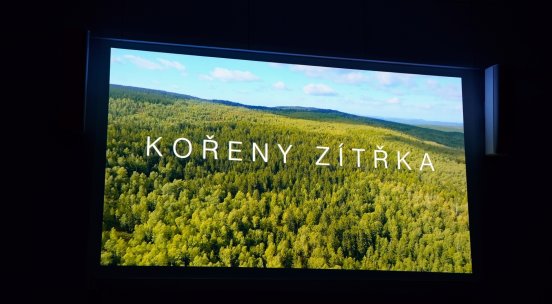
How can Czech forests be prepared for a changing climate, and how can their resilience be strengthened? These are the questions explored in the new documentary film Roots of Tomorrow, which premiered on 3 November at the Faculty of Forestry and Wood Sciences of the Czech University of Life Sciences Prague (CZU). Using the forests of the Brdy region as an example, the film introduces the principles of close-to-nature forest management and explores how they can be applied in forestry practice.
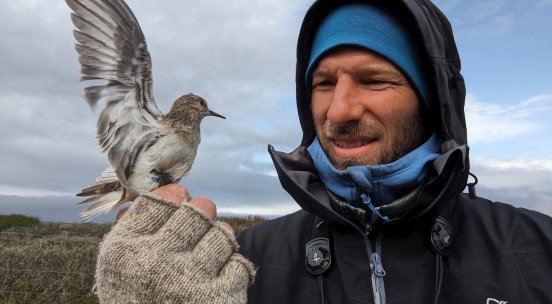
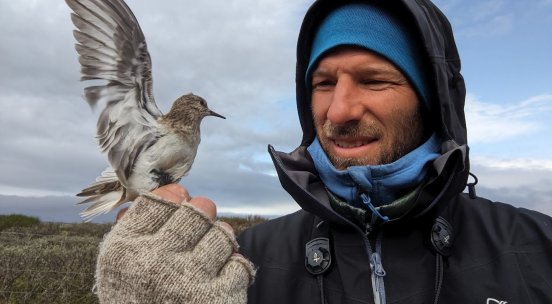
An international research team—including ornithologist Martin Bulla from FZP CZU—has just published a study in the Nature Ecology & Evolution journal examining the temporal links between the various phases of the annual cycle of migratory birds. By reconstructing the year-round migratory behavior of 2,324 individuals across 83 bird species, the researchers discovered a strong temporal connection throughout the migration process: from departure from breeding grounds and arrival at wintering grounds, to departure from wintering grounds and the eventual return to the breeding ones. As part of the study, the scientists compiled a unique global database of data from tracking devices. They found that while birds can compensate for some delays by traveling faster, this compensation is never complete.
The Department of Information Engineering at the Faculty of Economics and Management of the Czech University of Life Sciences Prague is monitoring and providing expert support for the deployment of the JEV model at the Mironet.cz e-shop. This is one of the first cases in Europe in which a model deliberately designed not to generate text is entering commercial operation. For the public, it is an opportunity to understand why part of AI research is shifting away from language generation and back towards well-measured uncertainty.
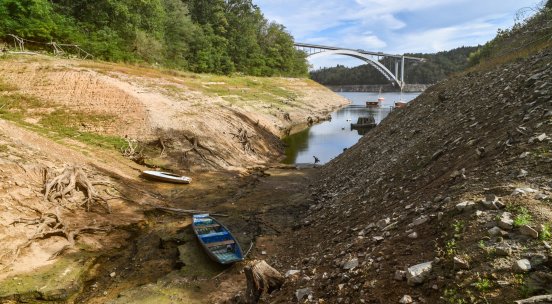
According to the World Meteorological Organisation (WMO), 2025 was one of the driest years in terms of river flow over the past 35 years. At the same time, the long-term decline in water reserves across the landscape continued, and for the fourth year running, glaciers in all major glaciated regions of the world recorded a net loss of mass. Hydrologist Oldřich Rakovec from the Czech University of Life Sciences in Prague (ČZU) also contributed to the preparation of the new report, State of Global Water Resources.
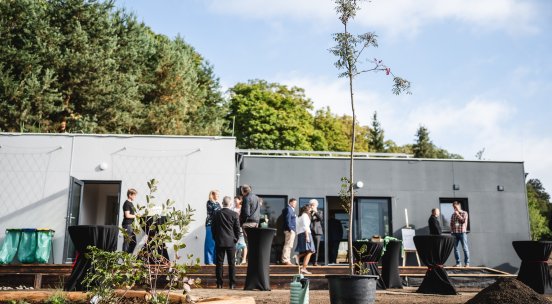
The new center in Chodov, in the Karlovy Vary Region, integrates water management, green spaces, renewable energy sources, and smart technologies. Rather than simply presenting individual solutions, it will measure and evaluate their performance in real-world conditions over the long term and share the insights gained with cities and municipalities.
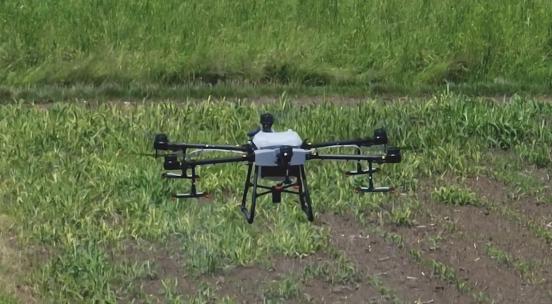
A drone surveys a crop, the data are rapidly analyzed, and agricultural machinery can immediately take targeted action based on the results. The AGRIP project combines drones, multispectral cameras, artificial intelligence, and a 5G SA network to enable faster, more precise decision-making in agriculture. The Czech University of Life Sciences Prague (CZU) has also been involved in developing and testing the technology.
In April 2026, the prestigious scientific journal Nature retracted a study on male zebra finch song that it had originally published in 2024. The retraction followed a detailed critical analysis by ornithologist Martin Bulla from the Faculty of Environmental Sciences at the Czech University of Life Sciences Prague (CZU) and his international colleagues, who had raised concerns about the study a year and a half earlier. The case was also covered extensively by the investigative science publication Retraction Watch.
A prominent Czech biologist and bioethicist, university lecturer, science communicator, writer, contributor to Czech Radio and other media, and recipient of numerous awards for his scientific and literary work, Professor Jaroslav Petr is a rare phenomenon in an age of narrow specialiZation—a Renaissance man in the best sense of the word. He completed his studies at the University of Agriculture in Prague in 1982 and, the following year, devoted himself fully to scientific research at the Institute of Animal Science in Uhříněves. His work focuses on reproductive biology and animal biotechnology. At the same time, he teaches at his alma mater, where he was appointed Professor of Physiology, Anatomy and Reproduction of Farm Animals in 2004. In his free time, he is dedicated to science communication and writes popular science books.
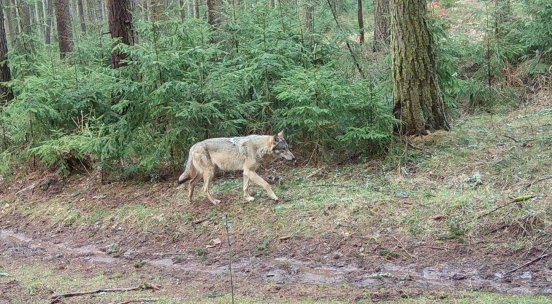
The Faculty of Tropical AgriSciences at the Czech University of Life Sciences Prague (CZU Prague) has become a partner in the newly funded SmartSheep project, supported by the NAZV – ZEMĚ II programme. The project focuses on scientifically evaluating measures designed to protect livestock from attacks by large carnivores, particularly the grey wolf.
This year's drought in Europe has been intensified by climate change, according to a new analysis by scientists from the World Weather Attribution (WWA) initiative. Although some regions have not experienced a significant decline in rainfall, higher temperatures have dramatically increased evaporation from the landscape, worsening the impacts of drought. A warming atmosphere has become increasingly "thirsty", accelerating the drying of soils, vegetation and rivers.
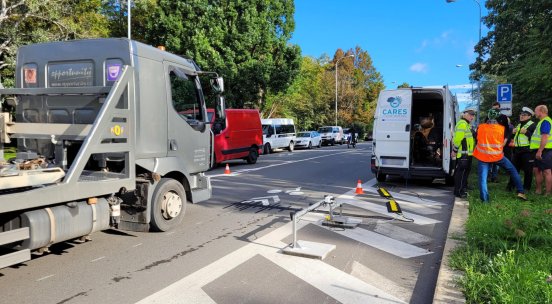
How can vehicles that exceed emission limits be detected more effectively, and air quality in cities be improved? The international CARES project (City Air Remote Emission Sensing) has found an answer. A research team that included experts from the Faculty of Engineering at the Czech University of Life Sciences Prague and the Faculty of Mechanical Engineering at the Czech Technical University in Prague tested modern technologies that enable contactless measurement of emissions from passing vehicles directly under real-world driving conditions.
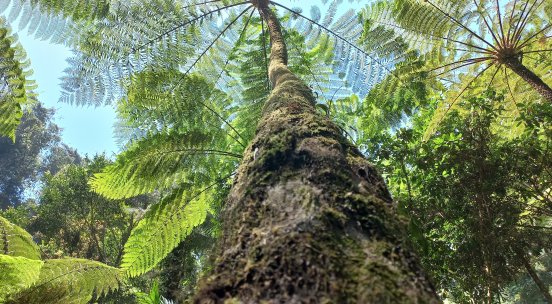
The world’s tallest tropical trees, which grow on the island of Borneo and reach heights of up to one hundred meters, are not more prone to water transport failure during periods of drought than shorter trees. Such is the finding of a new study published in the prestigious international scientific journal Science, with significant contributions from scientists from the Czech University of Life Sciences Prague and Mendel University in Brno. The research refutes the previous hypothesis that their hydraulic system fails during increasingly frequent droughts. These tree giants play an irreplaceable role in carbon storage, biomass production, microclimate regulation, and biodiversity support.
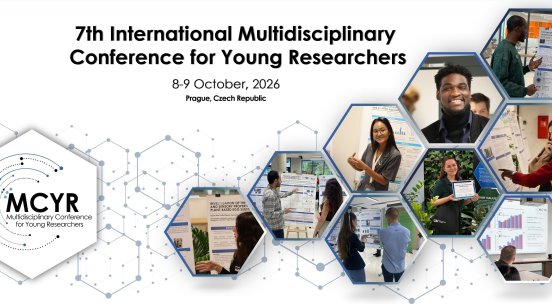
The 7th International Multidisciplinary Conference for Young Researchers (MCYR 2026) will take place on 8–9 October 2026, bringing together early career researchers across disciplines to share research, foster collaboration and discuss innovative approaches to current global challenges.
This scientific competition has been initially opened.
Deadline: December 15, 2025
NTK webinars for early career researchers
The deadline for submissions is 15 December
Open Science Week 2024 is fast approaching, and with it, from 21 to 23 October, you can look forward to Open Science from a funder's requirements perspective.
FLD contributed greatly to this!
Best Scientific Abstract Competition 2024 NOW OPEN