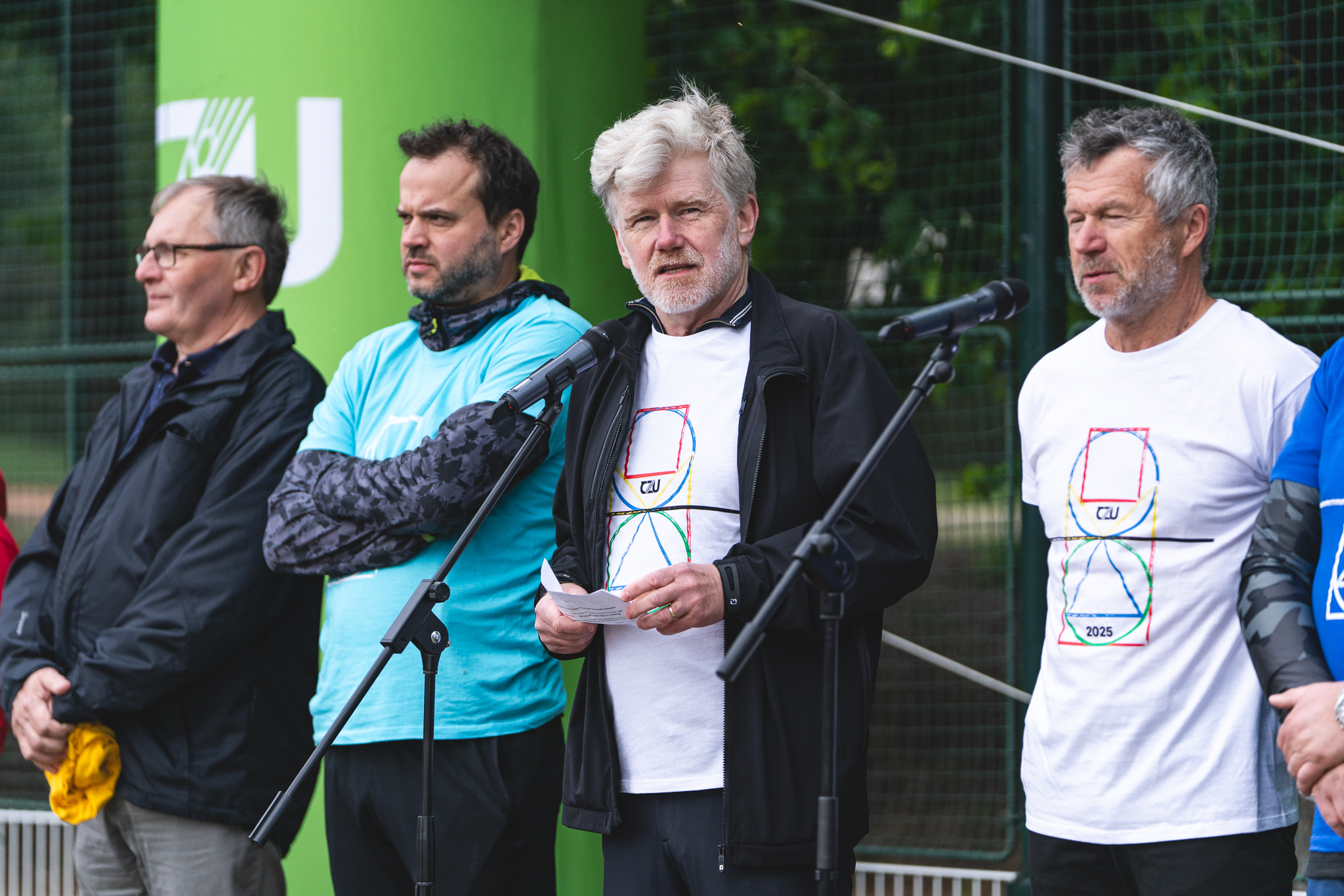
Over the past eight years, he has shaped the direction of CZU in Prague from his position as rector, bringing it to its current state. The university ranks among the top educational institutions in the national and global context. It performs well in prestigious rankings, educating experts who can withstand the rigorous competition of the academic environment at the world´s top universities. He managed to guide CZU through the treacherous waters of the COVID pandemic and, after Russia attacked Ukraine, mobilized all forces to help war refugees. In less than a month, Petr Sklenička´s second term as rector will come to an end, and the current first vice-rector, Michal Lošťák, will replace him. And this is an opportunity to take stock...
Mr. Rector, what were your ambitions when you took over the management of the university? Have your expectations been met?
Eight years ago, I had big ambitions, and some colleagues told me at the time that they were even too big. I wanted to get CZU among the top five Czech universities, measured by international rankings. I also promised a stronger university, one that is much more recognized. I also wanted us to start to assert ourselves more in global competition, especially, but not only, in European and other foreign projects. I am proud of our university for successfully fulfilling all these goals. Some of the results even exceeded my expectations.
Looking back over the past eight years, what were the most beautiful moments for you?
I was proud of how we, as a university, managed to maintain ourselves in crises that test character the most. Whether it was during the pandemic or helping Ukrainian refugees. However, I also consider meeting colleagues and students at events such as sports games, theater performances, concerts, tournaments, and more to be beautiful moments. Guests always admire the wonderful atmosphere that these events have. They make our university truly unique.
And which ones were the most critical? Was it the period of COVID or the events related to the Russian invasion of Ukraine and the subsequent influx of refugees to the Czech Republic, and therefore to our university? Or something completely different?
Well, you see, the most critical moments were actually the most beautiful for me at the same time, when I consider the incredible reaction of people at the university, the work of representatives in the CZU crisis staff, or our charitable activities. During the COVID period, I also chaired the Czech Rectors´ Conference (ČRK), focusing on crisis management of the entire Czech higher education system. It involved daily communication with the media and the government. It was actually my second “full-time” job for two whole years. I recall it as a period of almost absolute exhaustion, but at the same time, great satisfaction from this work. A tremendous experience for me, and my colleagues from CZU, as well as those from the ČRK presidency and other universities, who helped me significantly in those difficult times.
Under your leadership, CZU has evolved into an institution of prestige, as reflected in world rankings. What did you have to do to achieve this?
It is primarily the result of the great work of people at the faculties. To achieve this, it is necessary to create conditions at the university level that will not suffocate them, but instead motivate them to achieve excellent results. It is not easy to set them up correctly, let alone agree on a consensus across faculties. Each faculty and field has its own specific criteria according to which they should be evaluated, ranging from the classic and relatively most objectively measurable scientometrics to the evaluation of books and monographs, as well as applied results such as patents. These are different fields, different worlds that the internal evaluation methodology, as well as the methodology for financing faculties, must reflect. At the same time, it should be a motivating methodology, where each individual can see how much they have earned for their department or faculty. Methodologies that ignore merit are flawed, even if they have the most sophisticated algorithm.
Every dean, vice-dean, or academic senator logically defends the interests of the disciplines of their own faculty, and I greatly appreciate those who perceive and take into account the interests of the entire university. The rector´s task is to ensure that the resulting methodology and, ultimately, the university´s budget are a reasonable yet still adequate compromise, not a demotivating slur. The result must be stimulating for the healthy development of all parts of the institution. And believe me, it is not easy at all.
I have always supported the principle that state funds that come to the university are distributed to faculties as much as possible according to merit. I have always sought to incorporate this principle, along with the timeless principles that followed a longer-term vision, primarily towards the top quality of creative activities. I am confident that this has had a positive influence on the development of CZU in recent years.
Our university has been hindered in the past by the unnecessary unification of some rules and their adjustment according to the weakest link, which is the opposite path to what I promised and later practiced when managing CZU. Each faculty and each field within a faculty requires a different set of growth conditions. If, as rector, I unify these conditions at all costs, and adjust them according to the weakest faculty or field, I will unnecessarily slow down and demotivate the strong parts of the university. I will thus slow down the progress of the entire university, or even stop its development altogether. For eight whole years, I have followed the rule that, where it is even slightly possible, I leave freedom, and, therefore, the possibility of choice, for the faculty management. I myself was a dean for eight years, and I know how frustrated I was by the obligation to introduce unified university-wide rules at the faculty level, which were often worse or less motivating than our faculty´s.
The faculty is the basic organizational unit of the university and should have sufficient autonomy.
I have never attempted to limit this autonomy to the faculties; on the contrary, I have offered them additional options for choice even in cases where this was not possible before. However, it is essential to note that with greater autonomy comes greater responsibility for faculty management in terms of its status and development.
How do you assess CZU´s position in the Shanghai Ranking, where we are now in the top hundred in three fields?
I consider it a great success; no other Czech university can claim this achievement. At the same time, I see possibilities for further improvement, which would soon move at least two or three more of our fields into the top hundred as well.
How would you assess the composition of the fields that CZU offers today, and what significant changes have occurred in this regard during your eight years of leadership?
I am glad that CZU is developing healthily not only in terms of quality, but also in terms of the breadth of the portfolio of fields. In recent years, fields such as wood engineering, environmental engineering, and ecological engineering have strengthened our university. A significant moment was obtaining accreditation for garden and landscape architecture. I am also pleased about the recent strengthening of the food industry, and the latest study programs in the areas of cybersecurity and veterinary medicine. These are essential and healthy impulses for our university.
A crucial aspect of every educational institution is the application of scientific results in practice. What progress do you see here?
I see a significant shift in the application of the results into practice. I can judge this by the rapidly growing number of contracts for the application of these results that I sign on behalf of the university. Our university´s budget also confirms the growing share of contract research. I am happy about this. At the same time, I will allow myself one, probably typical for me, sigh. At every appropriate opportunity, I encourage our employees to be more courageous when addressing the significant topics of their research projects.
It always seems to me that the experience and skill of our employees offer much greater potential than is reflected in today´s research project topics. However, this is likely a broader problem, related to Czech history, and therefore quite possibly to our character. We are not very courageous; we often lack a clear understanding of our own field, we are afraid to take risks, and we prefer to bet on safety. In fact, the conditions of some grant agencies force us to do so. It is a shame, because we are thus depriving ourselves of the most important discoveries or innovations.
What do you think is the biggest problem with current higher education in the Czech Republic?
In my opinion, a significant problem with Czech education, not just higher education, is that almost every new minister introduces a new reform. And if the reforms of previous years have contributed to anything, it is primarily to a greater share of administration in our work, and therefore to a greater share of finances spent on activities that are not related to our main activities. Most education ministers seem to be afraid to leave development more to the universities themselves. The tendency to manage their growth in ever more detail is long-term, but very counterproductive. And as ministers and entire governments change, the reforms are often wall-to-wall. At the same time, there is a lack of political will, or rather courage, for vital and pro-growth changes in Czech higher education.
Universities have thus long lacked stability and predictability of conditions. As the Chairman of the Czech Research Council, for example, I signed a memorandum with the then Prime Minister outlining the annual minimum growth of institutional funding for science and research. However, the next government did not take this commitment into account.
You served as the head of the Czech Rectors´ Conference for several years. What did you manage to achieve?
During my entire two-year term as Chairman of the Czech Rectors´ Conference, I primarily dealt with the COVID pandemic and its impacts on higher education institutions. We dealt with the closing and opening of higher education institutions, the vaccination of students and employees, the lack of testing sites, masks or respirators, online and hybrid forms of teaching and financing of technical equipment for them, the possibilities of accreditation of purely distance forms of study programmes, funding for prevention, and many other things. Higher education institutions have changed, and so have people and society as a whole. It was a special time that probably influenced the future of higher education institutions more than many reforms, for better or for worse. It was pure crisis management; there was no room or mood for grand visions in those two years.
What will you do after your term ends, and what are you most looking forward to? Are you considering entering politics?
I am part of some great research projects, and I have some others in mind. My research team, the Land Research Group, has been in great shape in recent years. Half of it consists of foreign colleagues who are well-connected internationally. We have a range of good projects, articles, and applied outputs. We are going to apply for two ERC grants in the coming years. I really enjoy working at the faculty, and I look forward to implementing some other ideas that I have not had time for yet. At the same time, I have a “full-time” offer from an excellent foreign university. I am also considering some other offers that I prefer not to disclose at this time. I have rejected entering politics several times in recent years. The academic world is a lot more enjoyable.
Interview conducted by: Lenka Prokopová