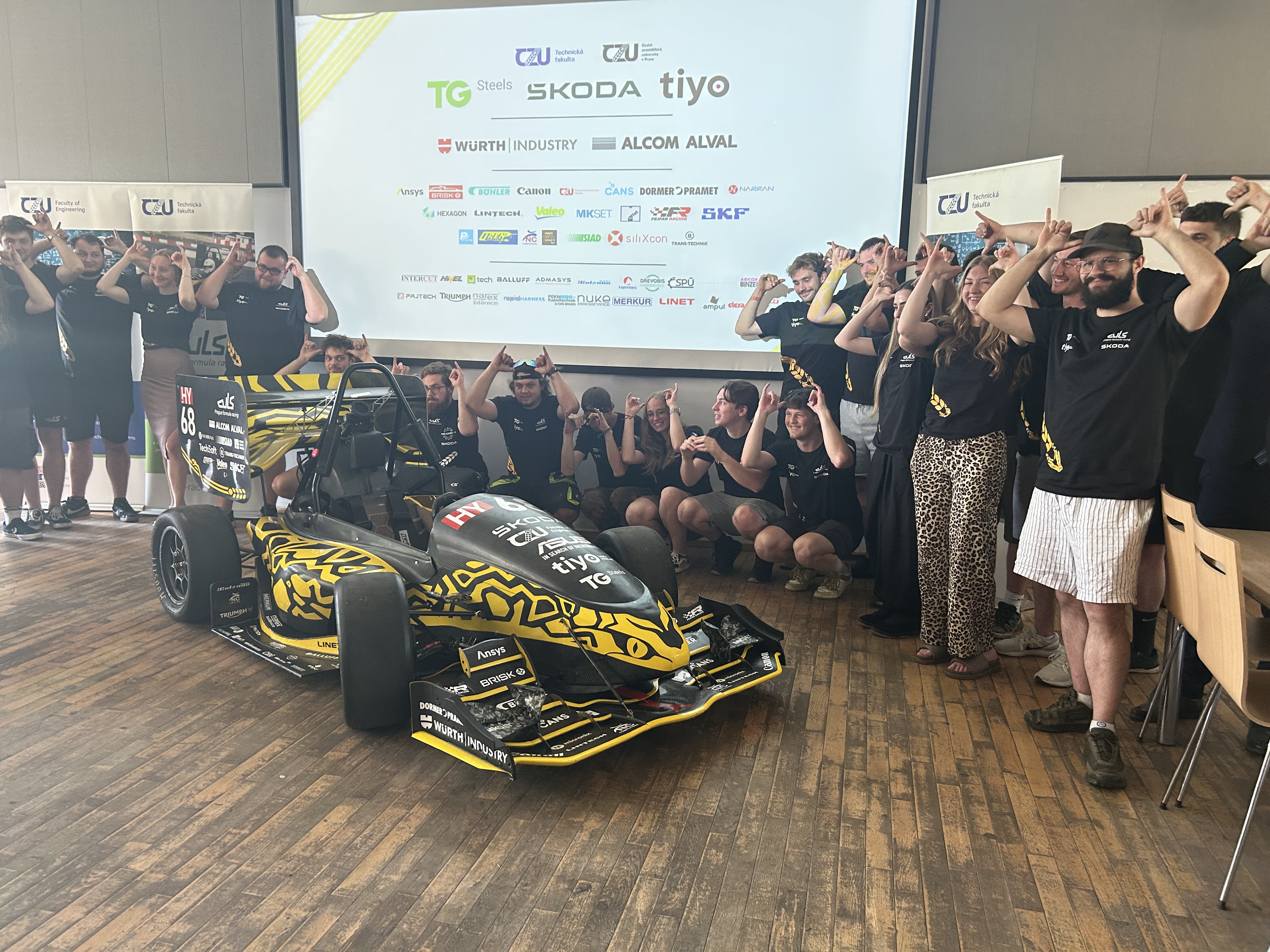
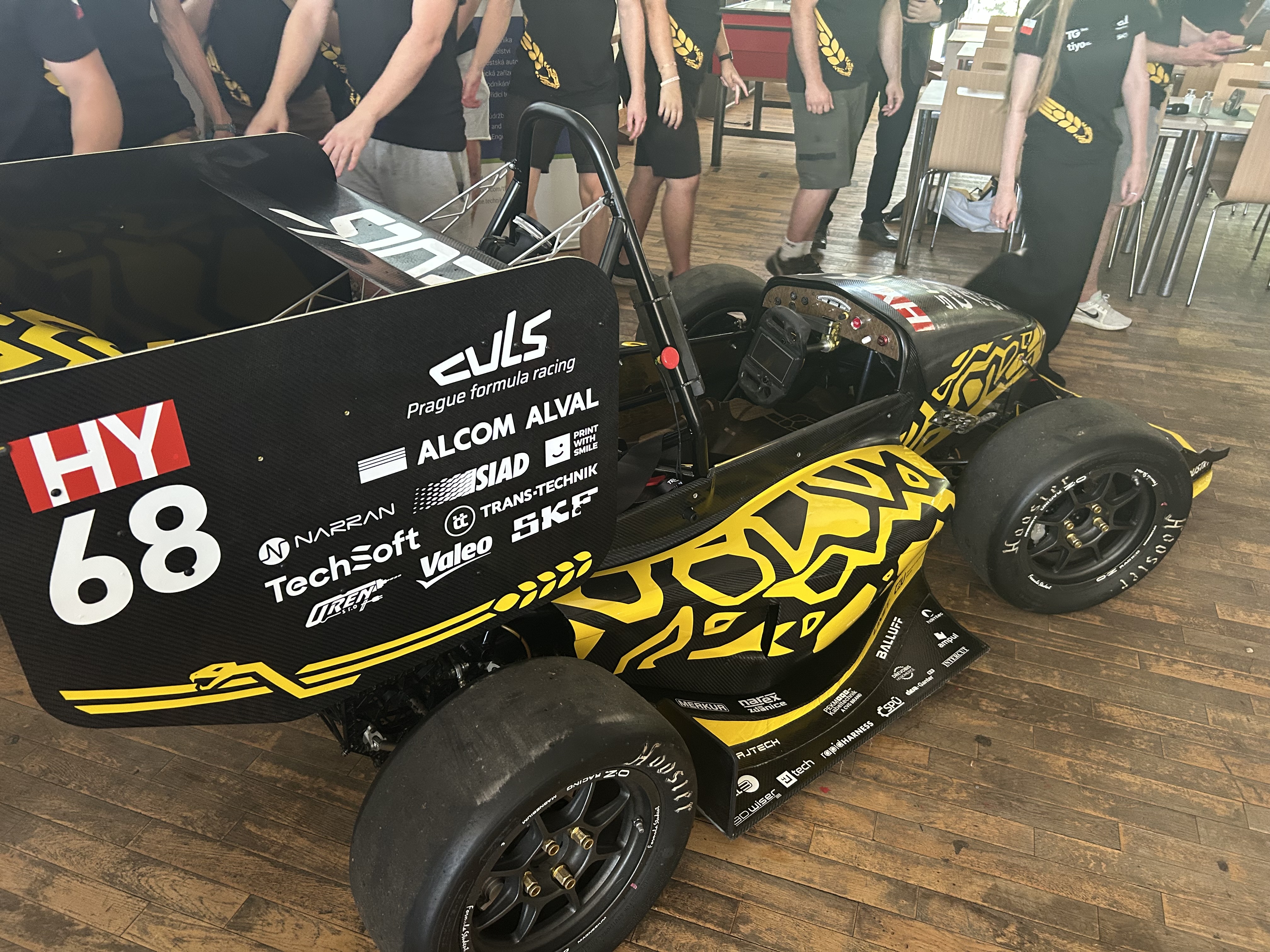
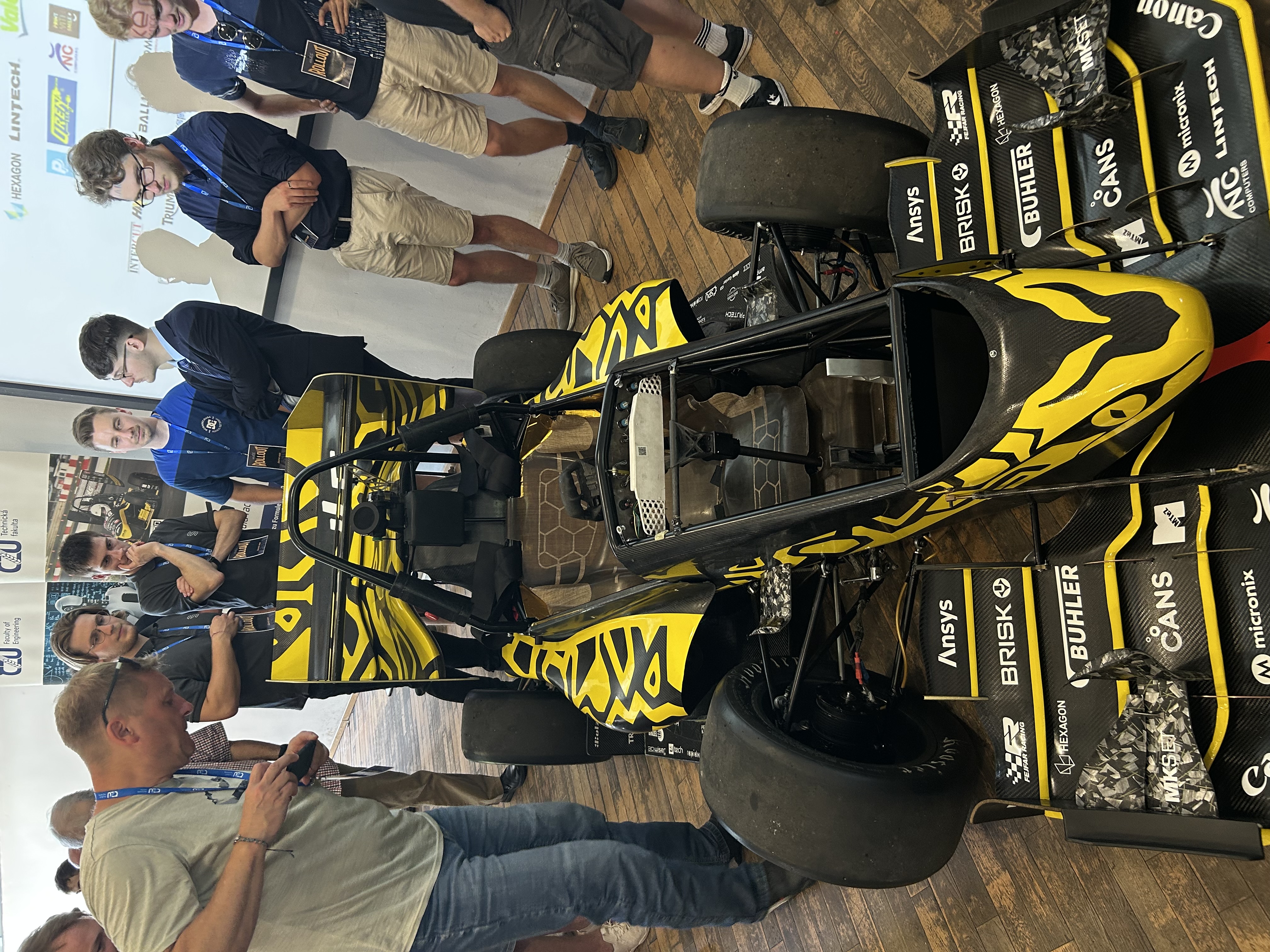
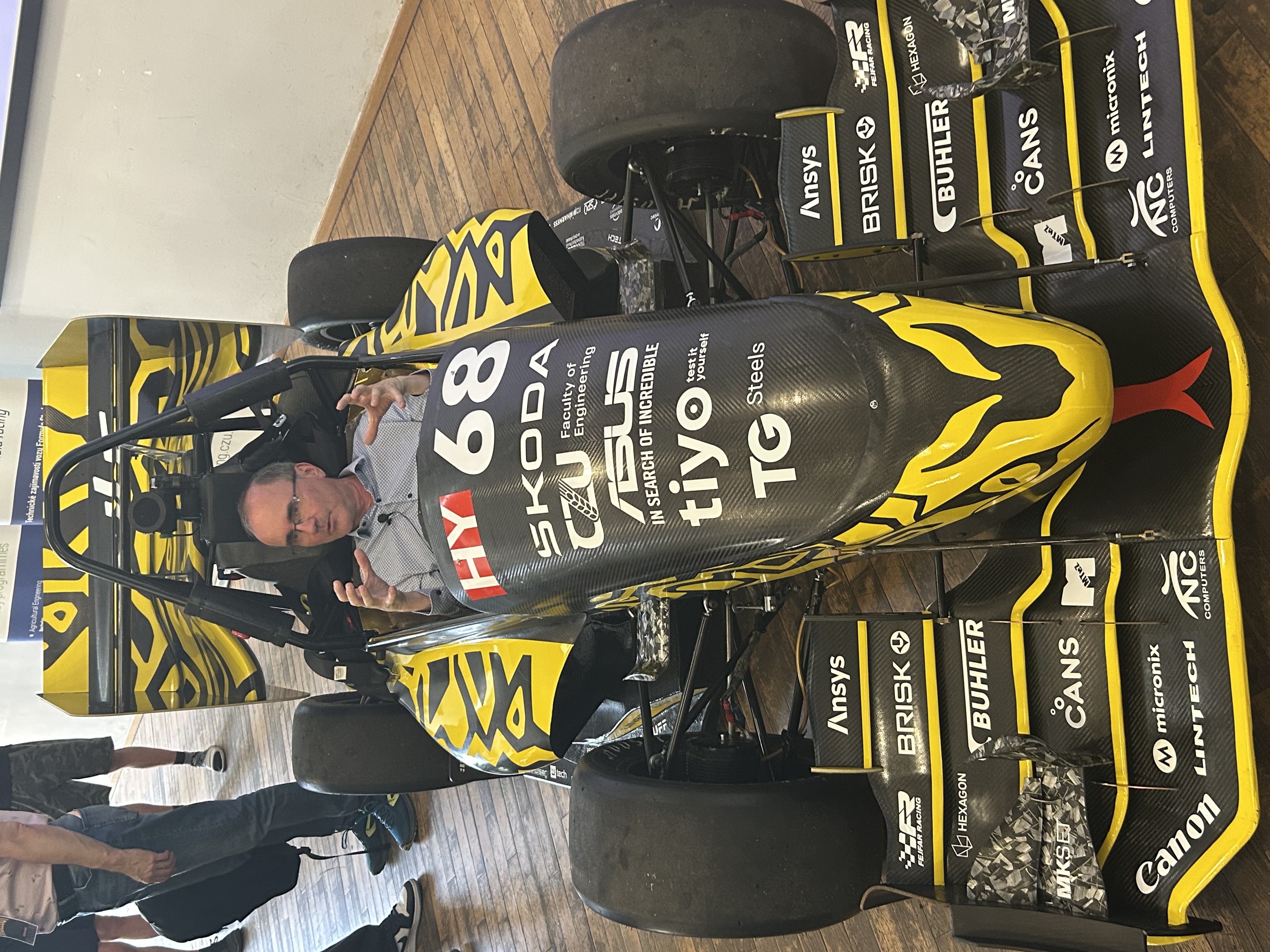
The CULS Prague Formula Racing team has welcomed a new addition to its stable. The hybrid single-seater, named Python, features a lighter design than its predecessors, a new hybrid system, bio-composite materials and a range of proprietary technical solutions. The eleventh-generation student formula car was officially unveiled on Thursday, 16 July 2026.
Like its predecessors, Python was born at the Faculty of Engineering of the Czech University of Life Sciences Prague, which has supported the project throughout its existence. The project gives students a unique opportunity to put theory into practice while preparing them for careers in the automotive industry and other advanced technical fields.
With Python, the CULS Prague Formula Racing team will enter this year’s season of the prestigious international Formula Student competition. The car is the result of almost ten months of intensive student work and is the most advanced single-seater in the project´s history to date.
The Faculty of Engineering: A Place Where They Create Real Technologies
The CULS Prague Formula Racing project is far more than just a student hobby. Above all, it is one of the most important forms of practical education at CZU. Students design, engineer, manufacture, programme and test their own racing car while gaining experience that conventional classroom teaching can rarely provide.
A total of 25 students from the engineering division participated in developing this year’s car. In comparison, the entire team comprises around 40 students from various faculties of the Czech University of Life Sciences Prague. In addition to technical development, they are also responsible for marketing, communication, commercial cooperation with partners and project presentation.
“Python represents the greatest technological leap our team has made in recent years. We focused primarily on reducing weight, improving reliability, developing a new hybrid system, increasing aerodynamic efficiency and using bio-composite materials. However, every new single-seater is first and foremost a learning experience for the students. The knowledge and experience they gain during their development are the most valuable outcome of all our work,” says Šimon Slavíček, team leader of CULS Prague Formula Racing.
Eight out of Ten Components Were Produced Directly at the Faculty of Engineering
This year, the students manufactured approximately 88 per cent of all the car’s components themselves. They used modern machining technologies, composite component production, CNC machining, electronics programming and engineering simulations.
The new single-seater weighs just 225 kilograms. A 71.5 kW combustion engine powers it, equivalent to 96 horsepower, supplemented by electric motors totalling 14 kW. It accelerates from zero to 100 kilometres per hour in under four seconds. Thanks to its new hybrid system with energy recovery, it will also offer greater efficiency, particularly in the most demanding Endurance discipline.
Eleven Years of Partnership Between the Faculty of Engineering and the Student Formula Team
CULS Prague Formula Racing has been an integral part of the CZU Faculty of Engineering for eleven years. During this time, it has grown from a small student initiative into a respected team that regularly competes against universities from across Europe.
“Formula Student perfectly reflects our vision of a modern technical university. It is not enough to pass on knowledge. We aim to create an environment in which students gain experience by addressing real technical challenges. CULS Prague Formula Racing demonstrates that the CZU Faculty of Engineering can educate highly skilled professionals who can succeed in international competition while still studying,” says Professor František Kumhála, Dean of the CZU Faculty of Engineering.
Formula Student as the Best Preparation for Industrial Practice
Working on a student formula car involves far more than designing and building a racing vehicle. Students learn project management, teamwork, communication with industry partners, financial planning and the public presentation of results.
This combination of technical and managerial skills is one of the main reasons why graduates of the project find employment with major Czech and international technology companies.
“While working on the single-seater, students acquire the skills that today’s employers are looking for most. They must combine knowledge of engineering, electrical engineering, information technology, manufacturing and economics while also learning to work effectively as a team under time pressure. This is an experience that no textbook can replace,” emphasises Associate Professor Martin Kotek, Vice-Dean for Study and Educational Activities at the CZU Faculty of Engineering.
High Ambitions
This year, the team will compete with the new Python single-seater in three Formula Student races in the Czech Republic and abroad. The students have particularly high expectations for the dynamic disciplines, where they aim to make full use of the new hybrid powertrain, sophisticated aerodynamics and significantly lighter construction.
However, Python is much more than just a racing car. It is a symbol of how students, with the support of the Faculty of Engineering, can create the technologies of the future, develop their talents and gain experience that opens the door to the world of cutting-edge industry and innovation.