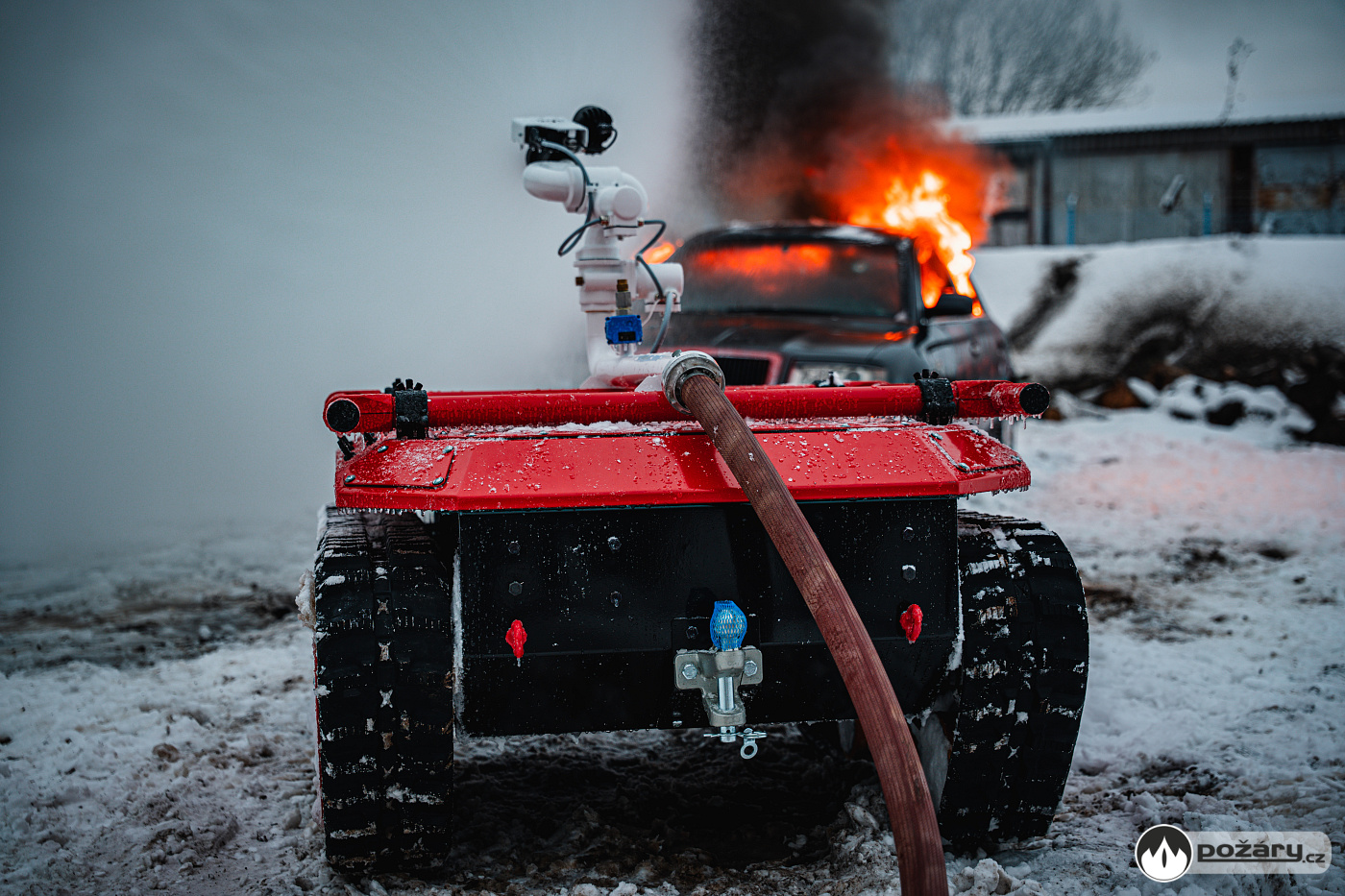
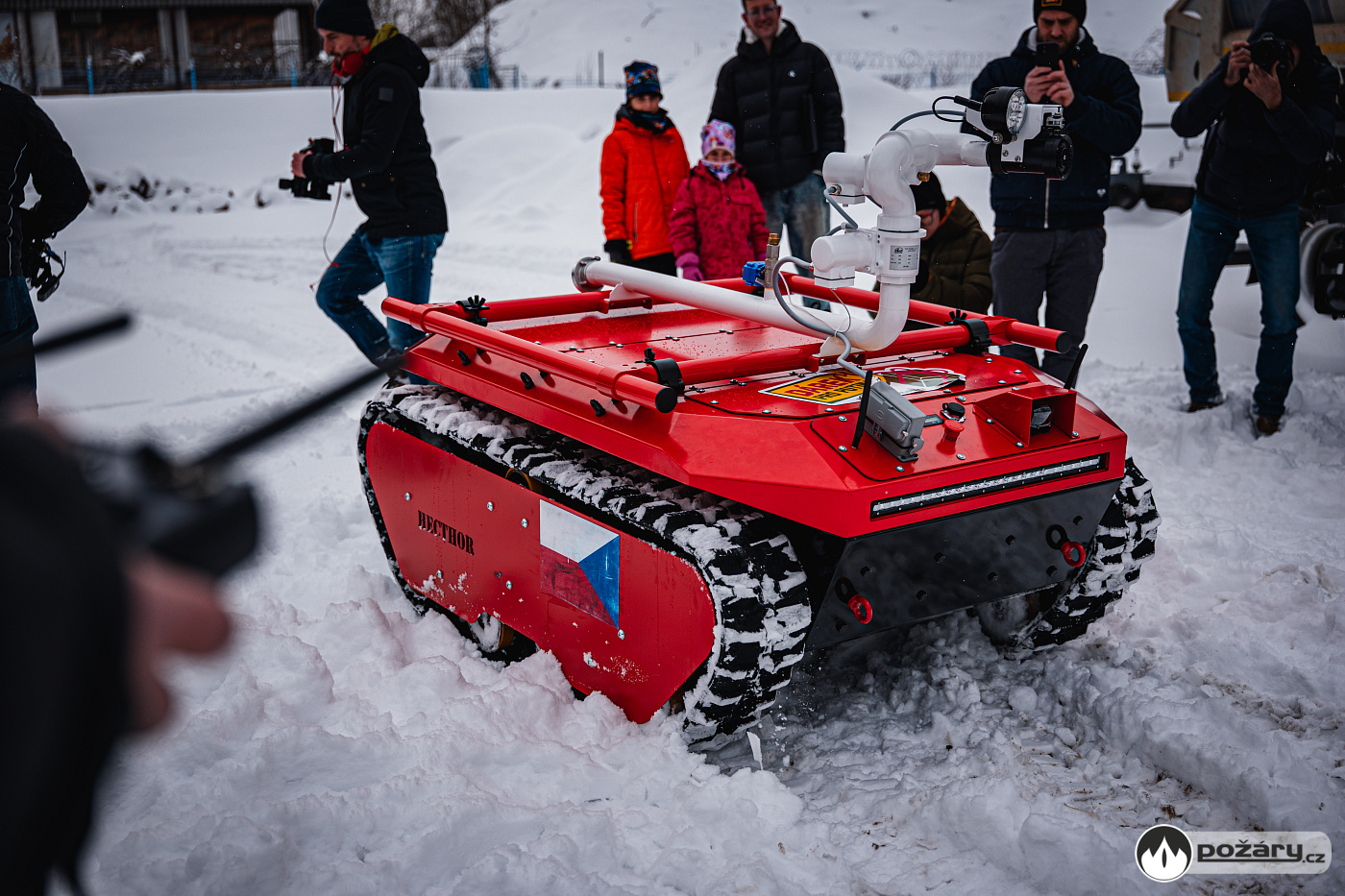
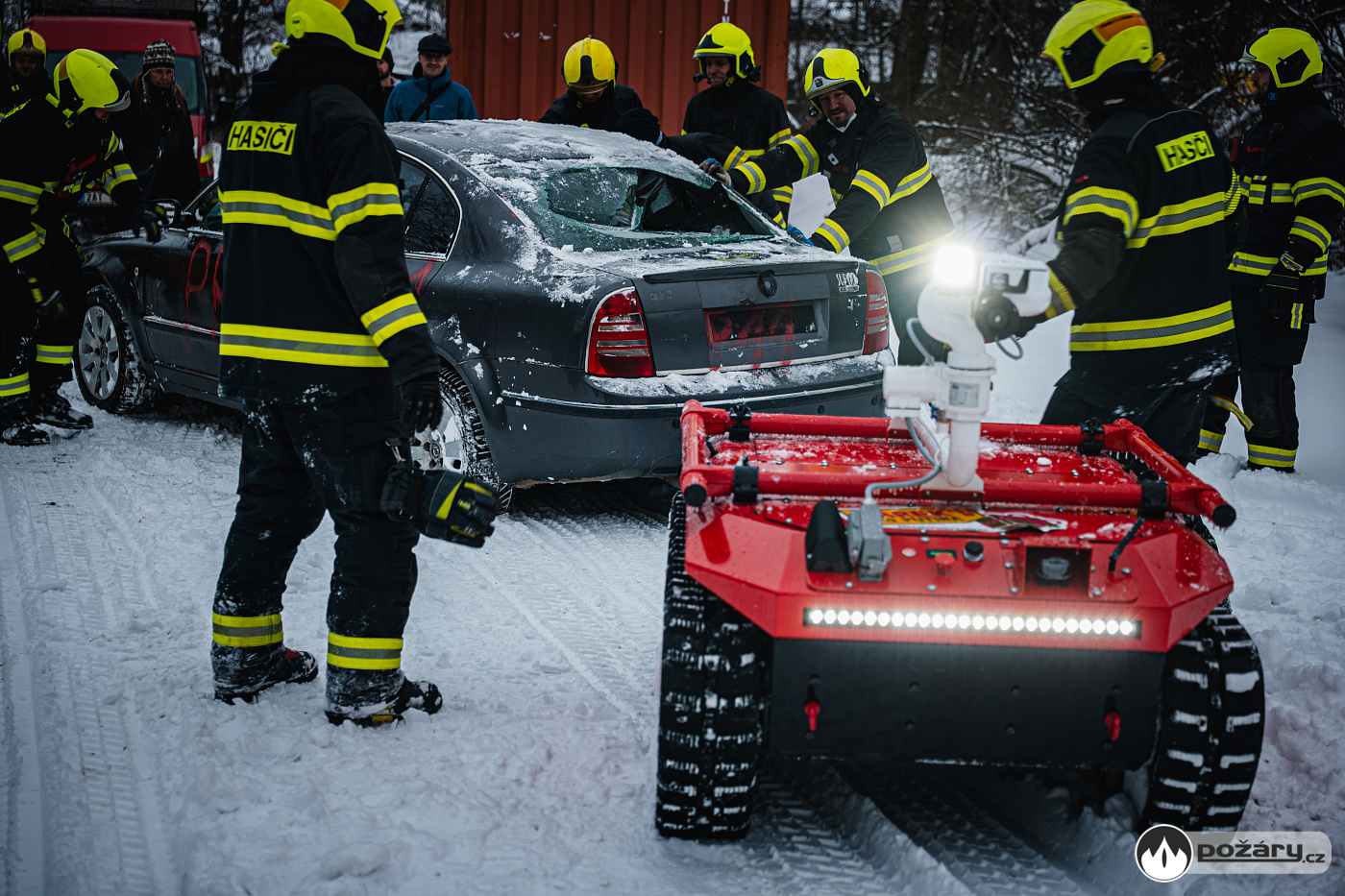
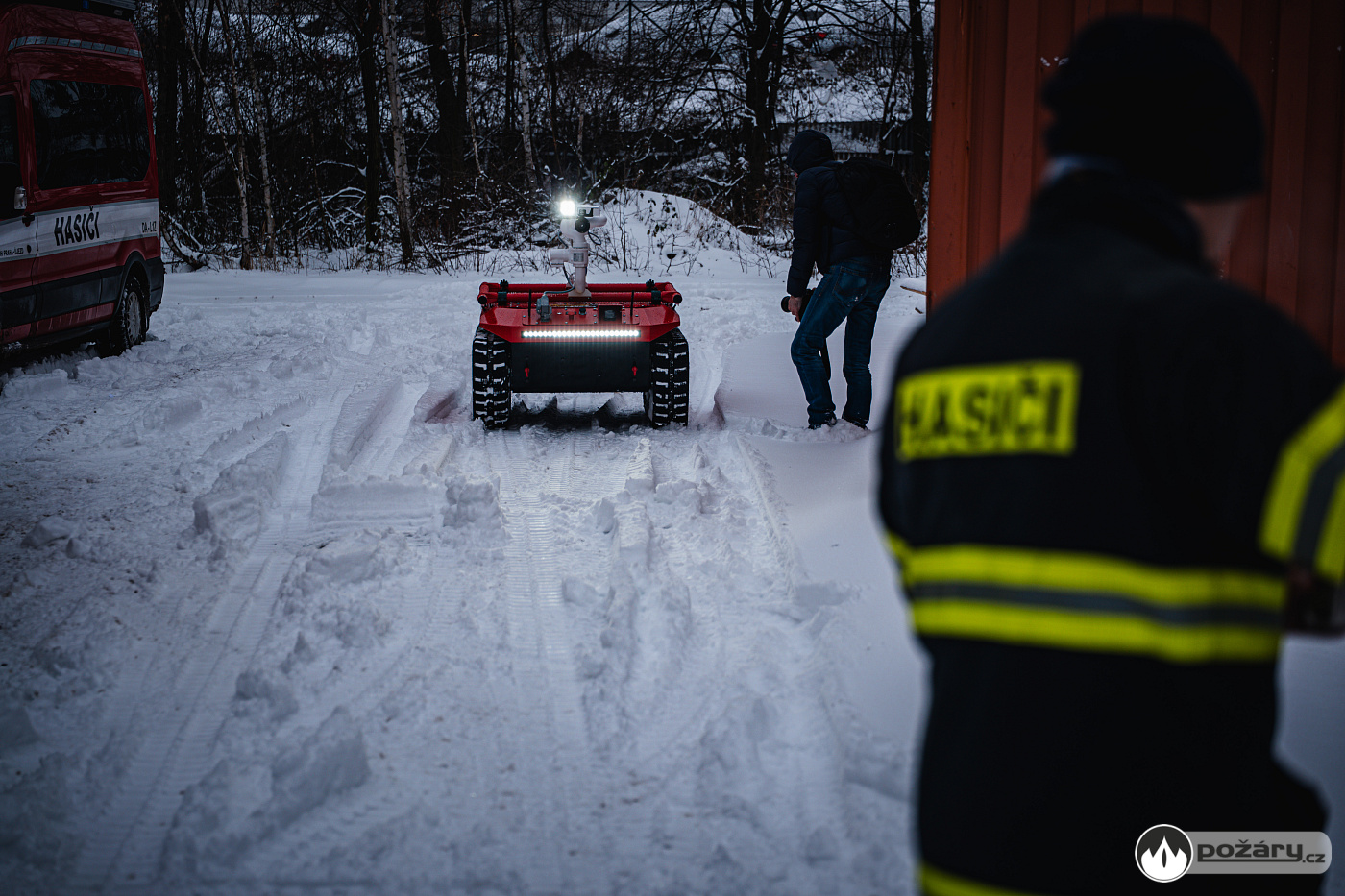
Following the successful deployment of the first firefighting robot in Ukraine, the development of which was significantly contributed to by the CZU Faculty of Technology spin-off Prolab Engineering, the next phase of Czech aid is coming. Tests of the new generation robot, Hecthora II, have been completed in Malešice. It will soon strengthen rescue services in the Kharkiv region, where its predecessor intervenes daily in the rubble after Russian attacks, thus protecting the lives of Ukrainian firefighters.
The first and second generations of Hector robots demonstrate that the connection between academic research and industrial production in the Czech Republic can compete with global giants and deliver functional solutions where lives are at stake. The first Hector proved itself to be an invaluable assistant when working in extreme conditions in Kharkiv. Thanks to the feedback from Pakl, the technological spin-off ProLab Engineering at the Faculty of Technology of the Czech University of Life Sciences in Prague was able to develop a new generation machine.
“Hector II is further proof of the purposefulness of our company and its role in fulfilling the third pillar of the university – the transfer of technologies to the real environment. Several people participated in its development, including students of the Ječná Secondary School of Economics. This cooperation inspired some of them to choose their future profession. After graduation, they became our students,o” says the founder of ProLab Engineering Petr Hnízdil, from the Faculty of Technology of the Czech University of Life Sciences in Prague.
The entire project is under the umbrella of the Dárek pro Putina initiative and the Team 4 Ukraine organization. A significant impetus for the development of these technologies was also the recent financial support of 100 million crowns from Ivo Lukačovič, the owner of Seznam. “What I like about this project is that it is something made in the Czech Republic, Czech hands built it, Czech heads invented it, and Czechs paid for it. It turns out that even a firefighting robot is competitive with what is produced west of the Czech Republic, and most importantly, it is for a third of the price,” notes Martin Ondráček from Dárek pro Putina.
Evolution based on experience from the front
The first Hector proved to be an invaluable helper, and the Kharkiv units became very fond of it. Based on their field experience and knowledge, they were then able to develop a new generation machine in ProLab. Hector II. is smarter and brings even more safety to firefighters than its predecessor. It is easy to operate, and anyone can handle it after a brief training session.
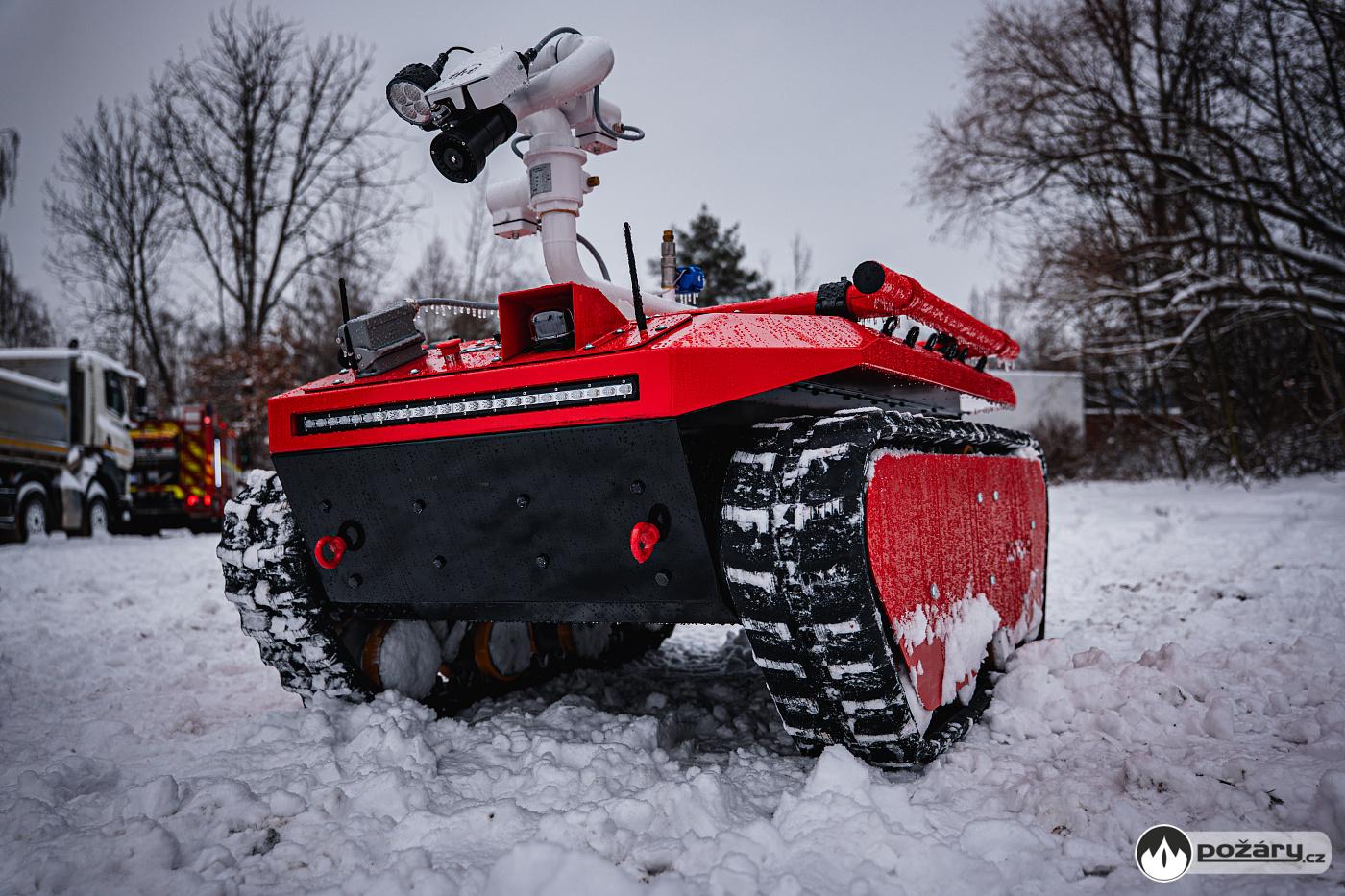
The chassis is lower, which enables it to handle steep slopes and sharp approach angles better. The robot can also handle long stairs. It is possible to remove the fire brigade superstructure, which came with the THT Polička mold. Or replace it with, for example, a compressor, pump, or stretcher that will help get the injured to safety. Lighting and a camera are built into the front of the body, unlike the older prototype.
“Today, Ukraine functions as the toughest test of European technologies. Not in a laboratory, but in real conditions. Projects like Hector show that when academic research, industrial production, and rapid execution are combined, Europe can deliver functional solutions where lives are at stake. These are exactly the projects we want to develop in the long term at S-Tech Ventures,” says Anna Růžičková, CEO of the industrial accelerator S-Tech Ventures.
Czech breakthrough in price: two million versus seven million
While foreign unmanned systems such as the French Colossus or the German Magirus start at seven million crowns with similar equipment, the Czech Hecthor II will cost approximately two million. At the same time, it offers higher modularity and a more robust design for deployment in a real-world conflict.
“Hector is proof that the Czech solution is globally competitive. Compared to some European projects, it offers higher modularity, longer operating endurance, and a robust design at lower acquisition and operating costs. The combination of performance and simplicity is the reason why Hector has stood up even in the extreme environment of Ukraine. We are further developing our cooperation with Team 4 Ukraine so that we can deliver additional units in the future that will protect the lives of firefighters and rescue workers on site,” says David Kubiš, sales director of Cyber ??Drone Solutions, which represents ProLab commercially.
Seeing means surviving: integrated camera
Thanks to its advanced AI navigation system, Hector II can autonomously map space and track people or objects. Orientation in the terrain is provided by a 360° lidar (a system that scans the surrounding area in 3D) and day and night cameras. It is controlled remotely via a secure, encrypted control terminal and offers automatic following or partial autonomy modes.
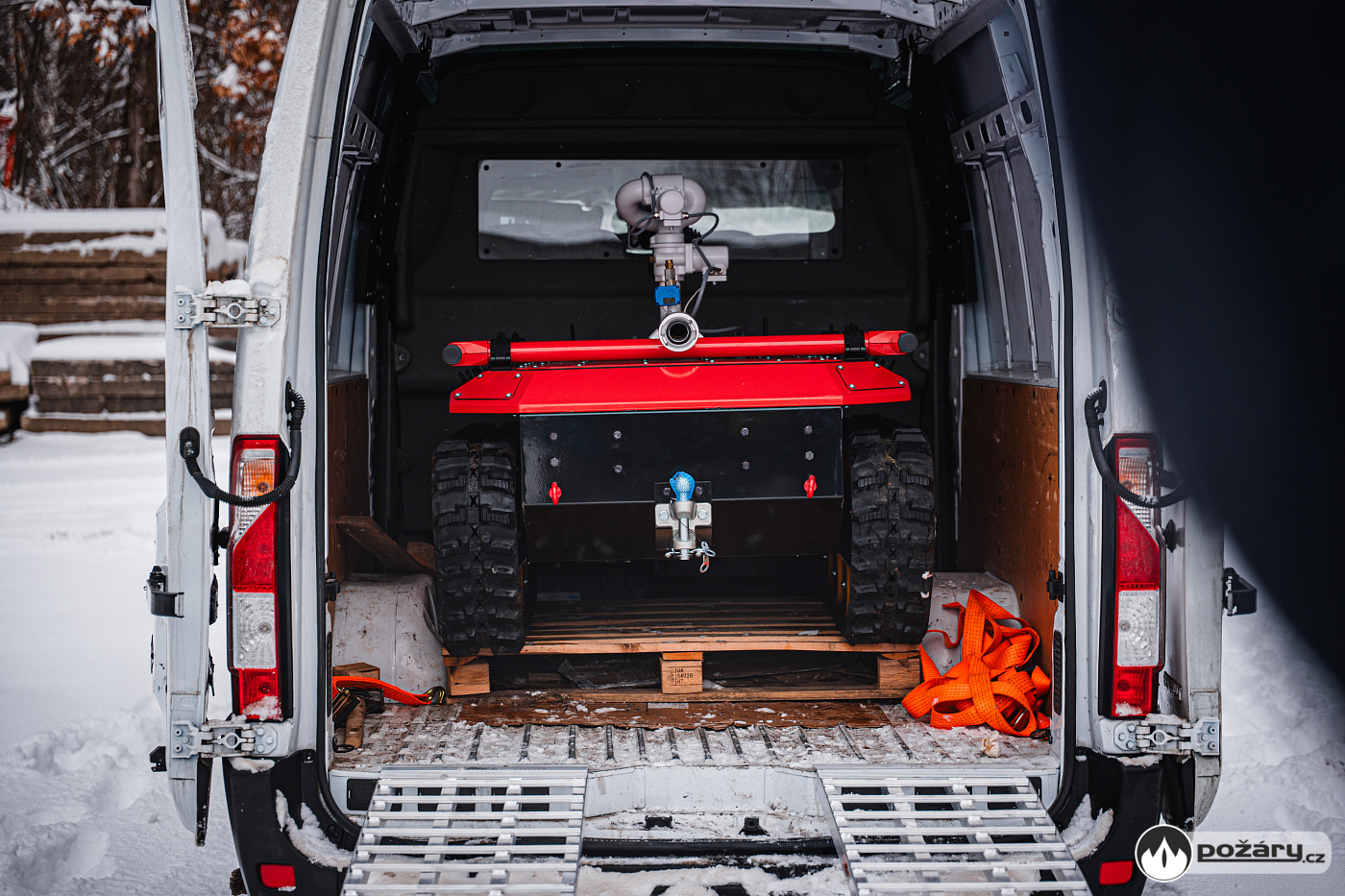
Hector II has compact dimensions and a low center of gravity. Thanks to its width of 120 cm, it can fit, for example, in a Ford Transit van exactly between the wheel arches - no trolley is needed. It weighs approximately 400 kilograms and can carry a payload up to 500 kilograms. It is powered by two electric motors (2 × 40 kW, total 80 kW) with a torque of around 3000–3600 Nm.
“Its powerful chassis can withstand even the most demanding off-road conditions. It can work for up to 14 hours without recharging, and we are constantly improving its driving characteristics thanks to tracks with a leading edge and a lower center of gravity,” concludes Petr Hnízdil, founder and director of development of the spin-off company ProLab Engineering at the Faculty of Technology of the Czech University of Life Sciences. This workplace has long ensured the production and sale of its own autonomous vehicles worldwide. It responds to the challenges associated with the information society and the use of modern technologies.
The new generation brings several improvements that make it a top tool for emergency services:
Extreme performance: The drive is provided by two electric motors with a total output of 80 kW and a torque of up to 3600 Nm.
High endurance: The robot can operate continuously for up to 14 hours without requiring recharging.
Compact dimensions: With a width of 120 cm, it fits into a Ford Transit van, eliminating the need for transport trucks.
Modularity: A firefighting vehicle, supply module, rescue stretcher, or monitoring with a thermal camera can be mounted on the universal chassis.
Traffic: Tracks with a leading edge and a low center of gravity ensure stability even in rubble.