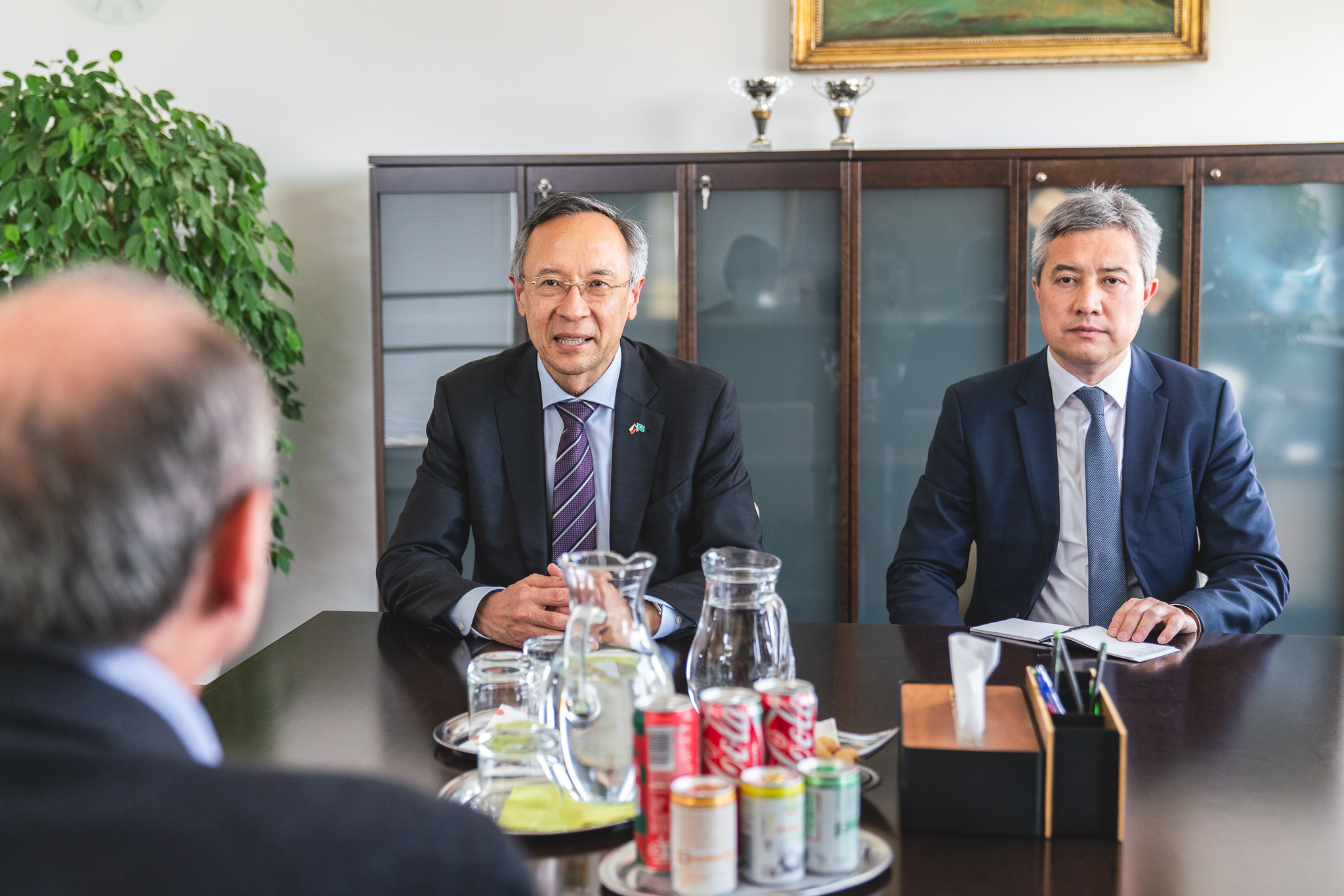
At the end of last week, the Czech University of Life Sciences Prague welcomed two distinguished visitors from Prague-based embassies. Rector Michal Lošťák discussed opportunities for cooperation with the Hungarian Ambassador András Baranyi, while the Kazakh Ambassador Kairat Abdrakhmanov addressed the continuation of long-term projects.
Hungarian VIP Guest at CZU
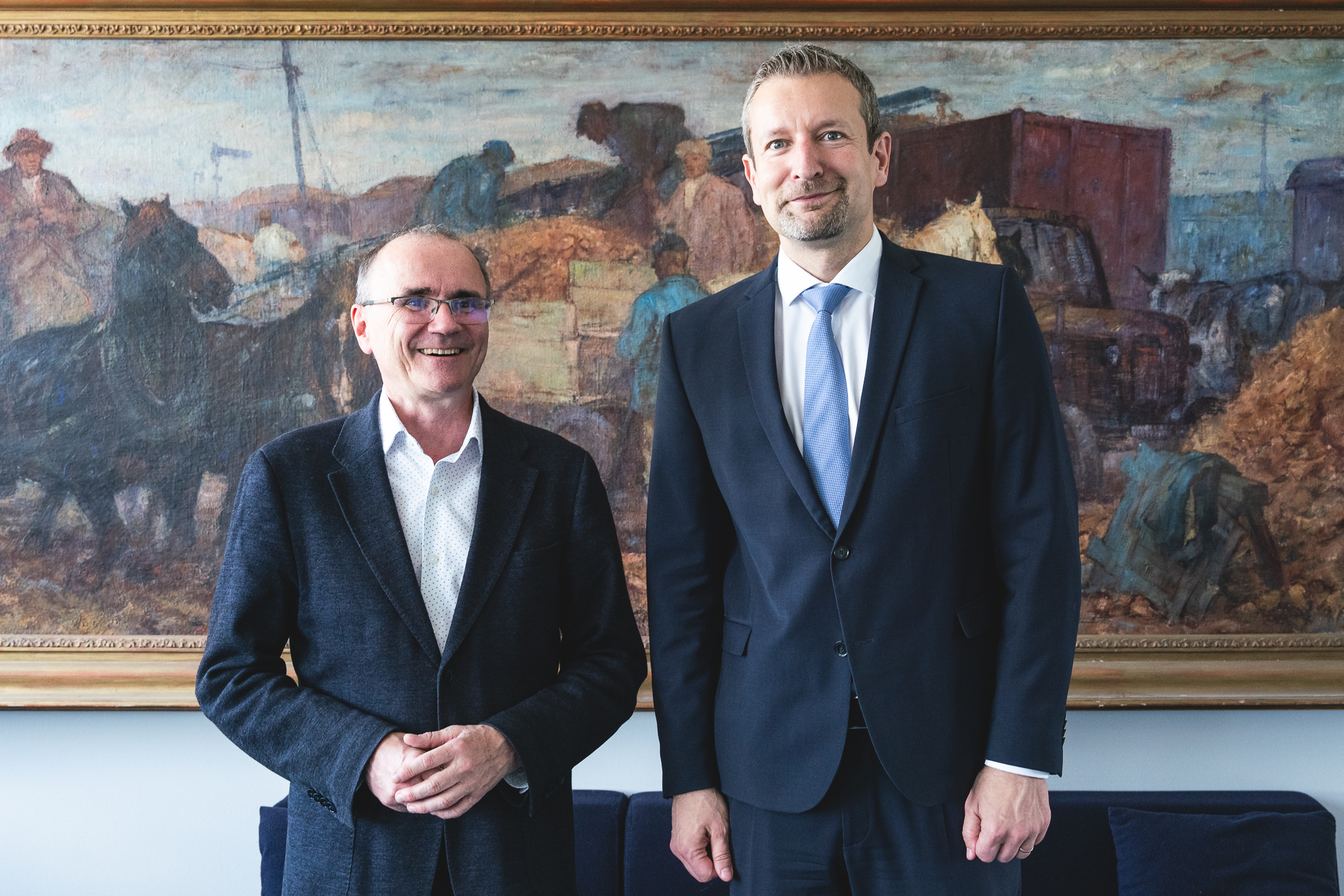
Thursday, 25 June, was dedicated to a Czech Hungarian meeting. H.E. András Baranyi, Ambassador Extraordinary and Plenipotentiary of Hungary to the Czech Republic, is no newcomer to CZU. However, his visit was his first opportunity to meet the university’s newly elected rector. As the Ambassador admitted, he visits the university “incognito” every week when he comes to buy his favourite dairy and meat products at the Food Pavilion.
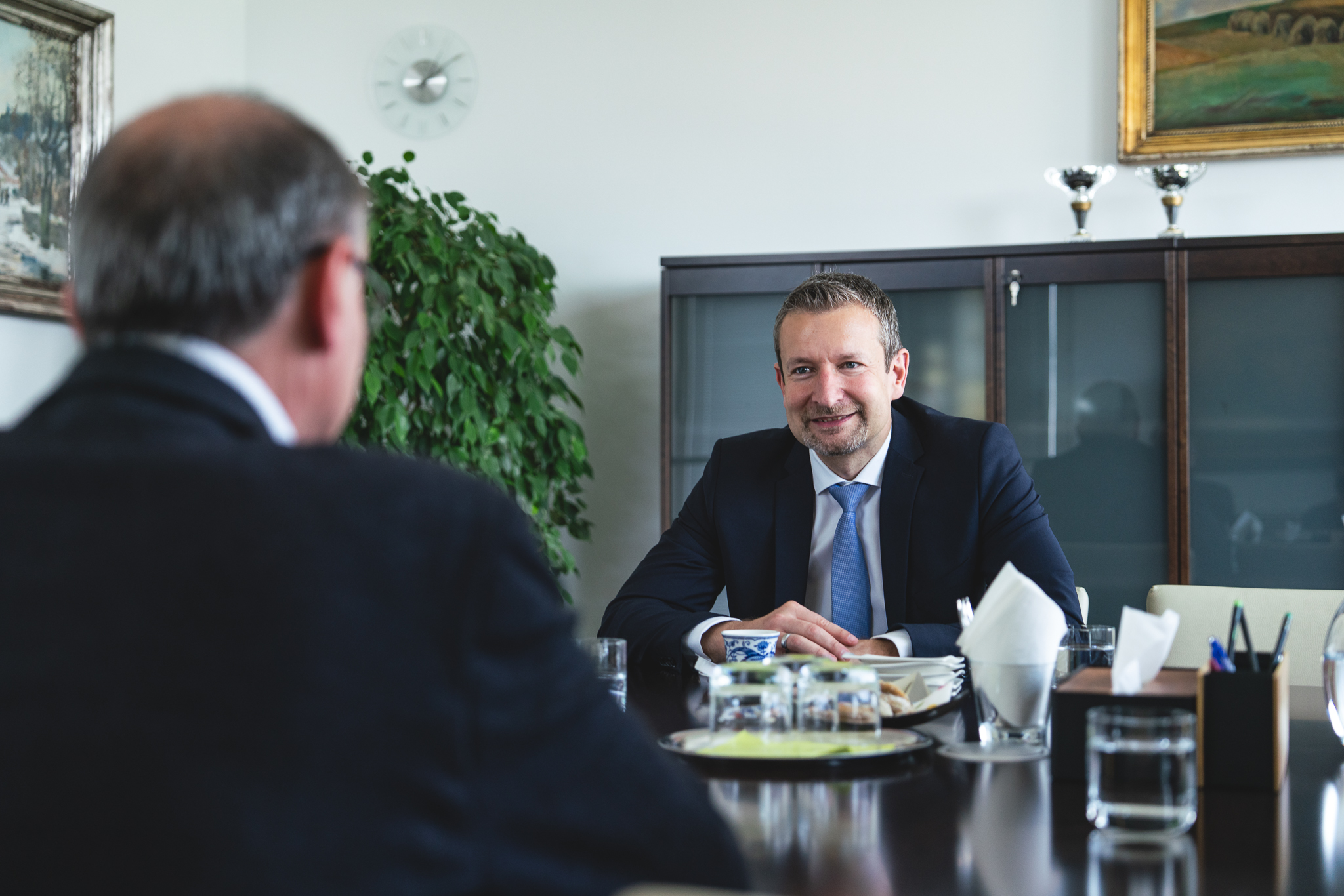
The meeting with the new rector focused on opportunities for cooperation between Hungarian and Czech universities in student exchange, as well as on assessing mutual relations and their prospects. “Agriculture and the food industry are very important sectors for us. We would be pleased to continue the cooperation that already exists,” the Hungarian Ambassador said.
At present, ten Hungarian students are studying at CZU with the intention of obtaining a degree. Cooperation with the Hungarian side takes place both through bilateral initiatives and major international projects, such as the Interreg Danube 2021–2027 funding programme. Through his professional activities, Professor Lošťák is in contact with representatives of the Hungarian Academy of Sciences. CZU’s partner university is the Hungarian University of Agriculture and Life Sciences (MATE), based in Gödöllő.
“At the moment, we are trying to attract as many European students as possible to our English-taught study programmes, which account for about one third of our offer. We will also focus on Hungarian students and aim to convince them that we can offer high-quality programmes at a safe, beautiful campus-based destination. We already have a campaign prepared specifically for students from Hungary,” said Mikuláš Josek, Head of CZU’s International Relations Office, at the meeting with the Hungarian Ambassador. He added, “For our students, short-term internships with a practical focus are more attractive. For example, one of them expressed interest in an internship at the Budapest Zoo. Nevertheless, we find it difficult to persuade students to travel not only to Hungary, but anywhere abroad.”
Hungarian Ambassador András Baranyi outlined opportunities for cooperation in translating technology into practice and noted that in Hungary, the private sector´s involvement in university governance has helped improve universities’ financial situation. As CZU Rector Michal Lošťák confirmed, cooperation with the business sector is also becoming a priority for Czech universities. “This topic is likely to become increasingly relevant, also considering that we will receive less funding from the state budget. To have more money for academia, we need the private sector.” In the autumn, the Hungarian side is preparing an event focused on cooperation between Czech and Hungarian universities, with the theme of supporting entrepreneurship within universities. Naturally, the Czech University of Life Sciences Prague will take part.
CZU’s Cooperation with Kazakhstan Has a Long Tradition
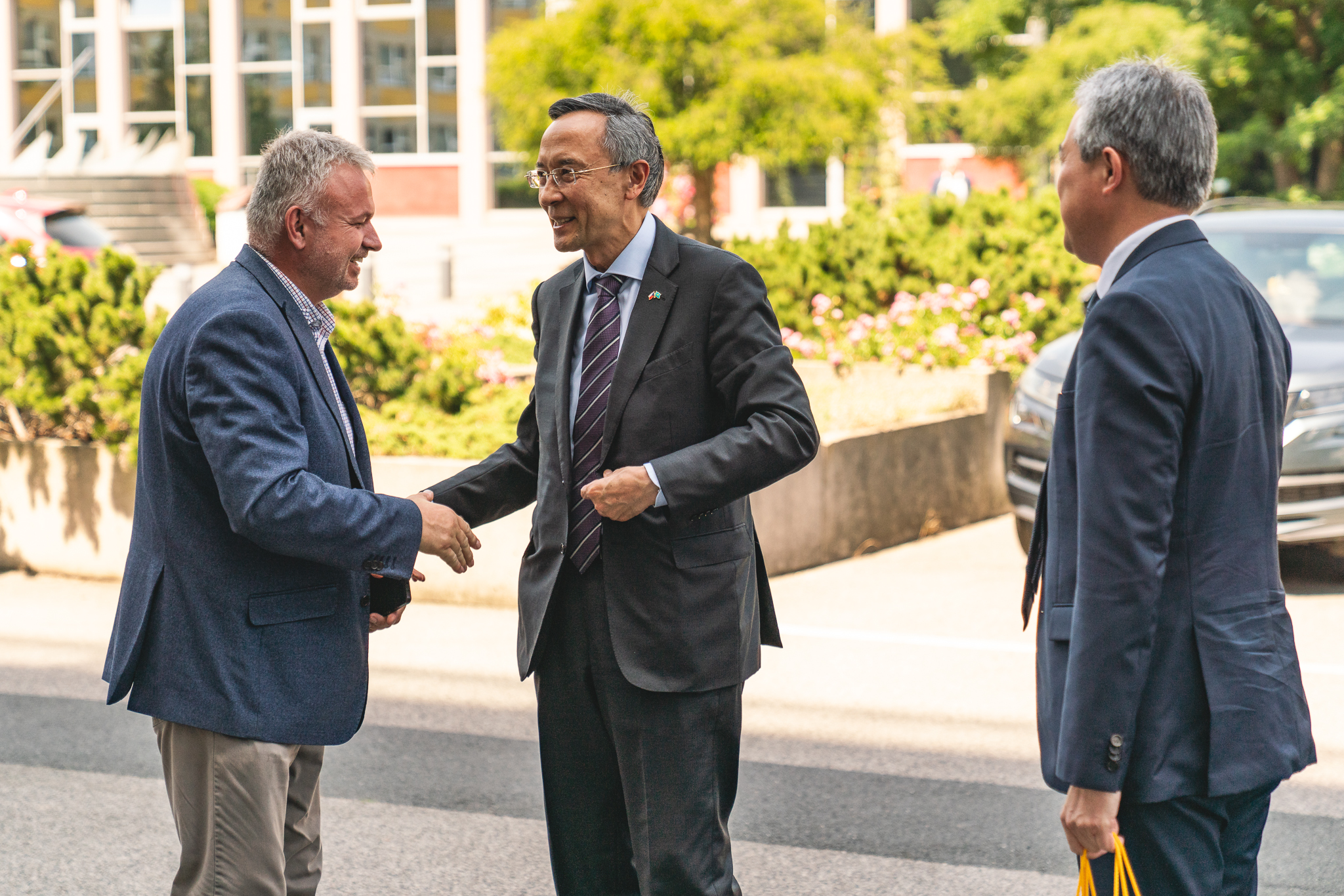
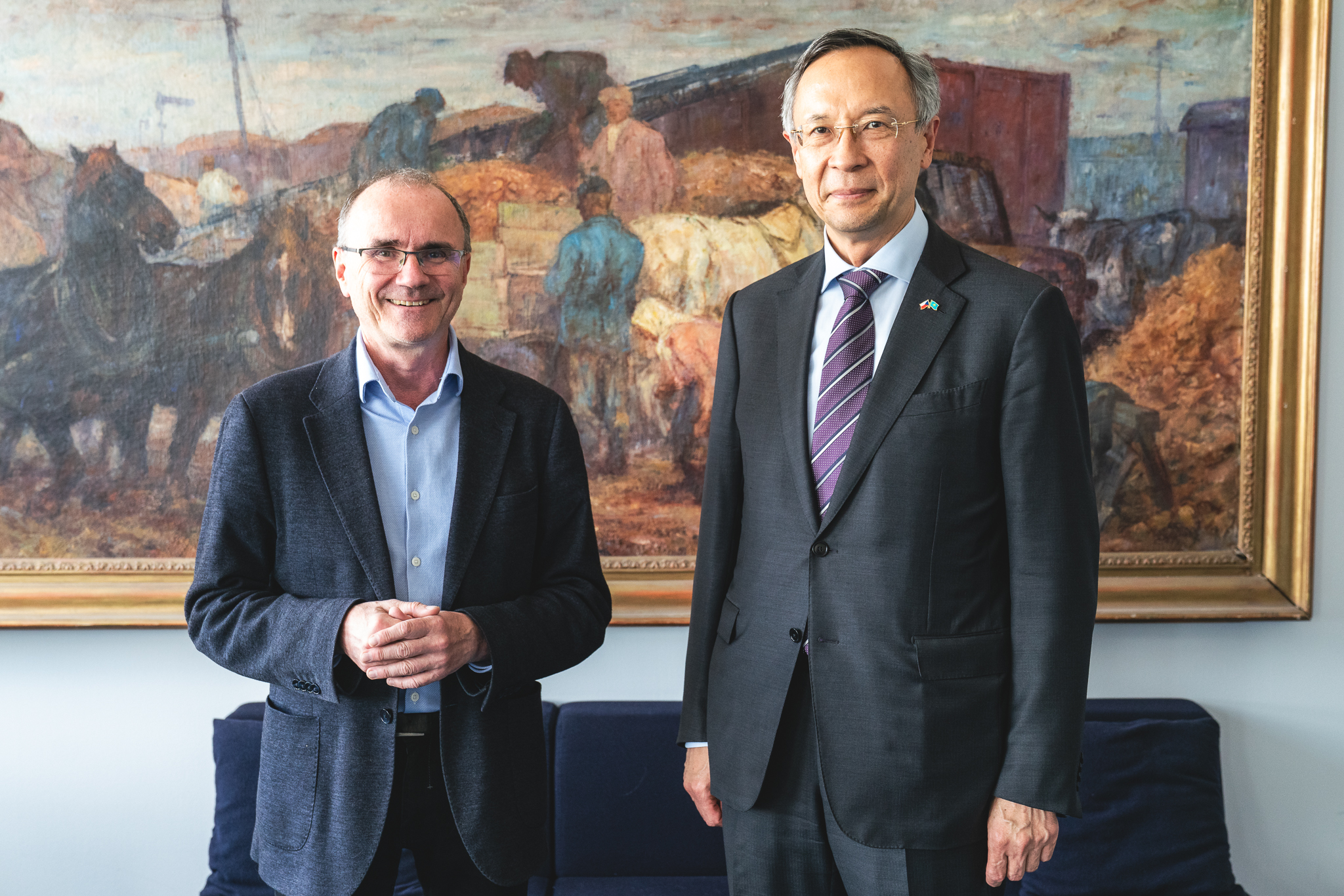
The Hungarian guest was followed on Friday, 26 June, by a delegation from Kazakhstan. H.E. Kairat Abdrakhmanov, Ambassador Extraordinary and Plenipotentiary of the Republic of Kazakhstan to the Czech Republic, met with representatives of the Faculty of Engineering and was then received by Rector Michal Lošťák. The Kazakh Ambassador expressed his thanks for the cooperation that CZU maintains with universities in Kazakhstan, many of which our rector has personally visited.
The priority topics of interest to Kazakhstan include biodiversity, sustainability, the circular economy, ESG and smart farming. Kazakh students who studied at CZU have, upon returning home, contributed their experience to improving the quality of life and often influence public policy as well. The discussion also touched on support for Kazakh companies operating in the Czech Republic, for example, by enabling them to participate in the career fair and find suitable employees.
“There is a very strong community of students from this Central Asian country at CZU; currently, we have almost 700 young Kazakh students here. In the future, we would also be happy to welcome more people from this destination to scientific and doctoral positions at CZU,” Michal Lošťák emphasised.
One of the most recent examples of CZU’s long-term cooperation with Kazakhstan is a large-scale project involving artificially planted forests — so-called green belts around cities — including around the capital city of Astana. Forest belts several kilometres wide serve as windbreaks, protecting against extreme weather and dust from the steppe. Experts and scientists from CZU’s Faculty of Environmental Sciences have long cooperated with partner universities in Kazakhstan on projects related to restoration, the environment and sustainable agriculture.
“Our involvement in these activities shows that CZU’s relations with Kazakhstan are not one-off, but have a long-term character. Cooperation has gradually shifted from research into post-socialist transformation and cultural changes towards practically oriented projects in the fields of sustainable agriculture, rural development, education and capacity building at partner universities,” said the CZU Rector in his assessment of cooperation with Kazakhstan.
Professor Lošťák has visited, for example, the Kazakh National Agrarian Research University in Almaty, the S. Seifullin Kazakh Agrotechnical Research University in Astana, and other universities in the country, and has participated in several joint projects. One of these was SARUD – Sustainable Agriculture and Rural Development, which focused on creating and implementing a master’s degree programme in sustainable agriculture and rural development in Russia and Kazakhstan. This cooperation was followed by the SAGRIS project – Enhancement of Postgraduate Studies on Sustainable Agriculture and Future Farming Systems, implemented between 2019 and 2022. It aimed to strengthen doctoral education in sustainable agriculture, climate change, digitalisation, future farming systems and transdisciplinary research.